

Instrumentation Loop Troubleshooting & Analysis
Systematically diagnose and resolve measurement and control loop failures
What You Can Do
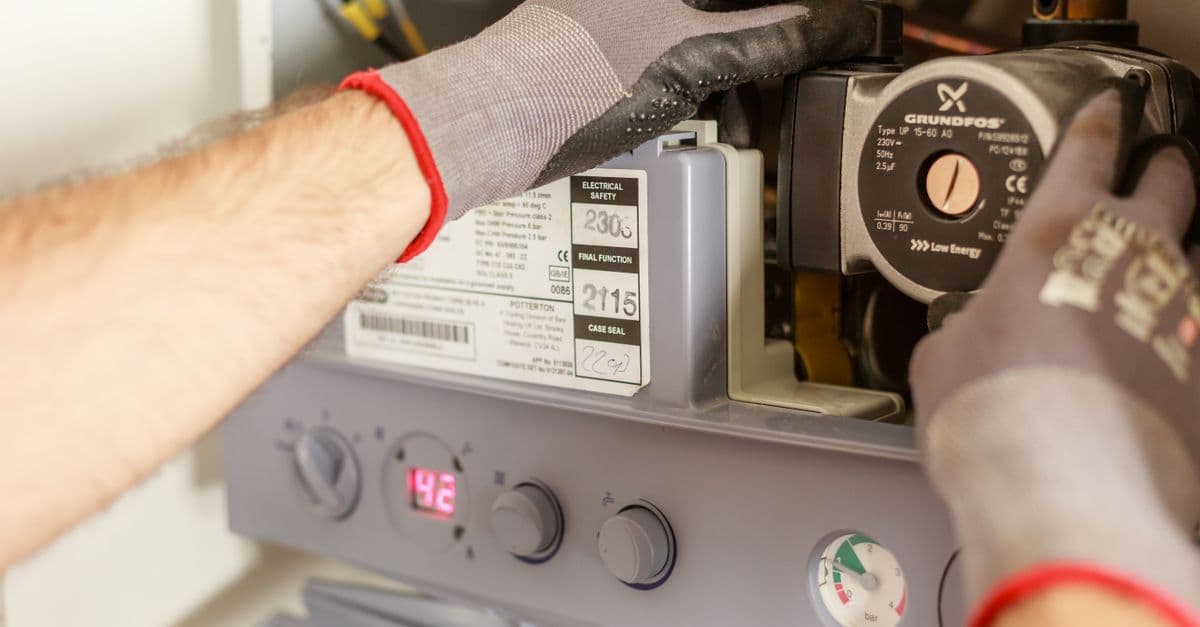
You can use this skill to investigate failing instrumentation and control loops with engineering precision. Claude provides structured root cause analysis, performance verification procedures, and actionable recommendations for tuning, signal integrity, and loop interactions. Perfect for manufacturing, process control, and automation environments where measurement accuracy and control stability are critical.
Features
Systematic 5-Why methodology and failure tree analysis to identify the source of loop failures from symptom to root cause
Generate step-by-step checklists and procedures to test measurement accuracy, response time, and control stability
Analyze sensor, transmitter, and field device faults with systematic troubleshooting trees based on failure symptoms
Diagnose and resolve noise, drift, filtering issues, and signal conditioning problems in measurement loops
Recommend PID parameter adjustments, anti-windup strategies, and cascade loop optimization based on observed behavior
Generate formal FMEA and failure tracking documentation with risk ratings and preventive action plans
Identify anomalies, drift patterns, and oscillations in measurement data streams to pinpoint failure mechanisms
Diagnose cross-coupling, cascade conflicts, and multi-loop interaction issues causing instability
Example Output
Pressure Loop Oscillation Analysis
Symptom: Pressure measurement oscillates ±2% around setpoint, control valve hunting
Root Cause Found: Over-aggressive PID tuning (Kp=5.2) with 200ms sensor lag
Verification Steps:
- Step test at 20% valve opening → measure rise time (expected ~2.5s)
- Check sensor calibration against standard (tolerance ±0.5%)
- Inspect transmitter damping setting (current: 0s, recommend: 1-2s)
Recommended Actions:
- Reduce proportional gain to Kp=1.8
- Increase integral time to Ti=45s
- Enable transmitter damping at 2s
- Re-verify loop with step test
Temperature Control Loop Tuning Report
Current Performance: Overshooting 8°C, 40s settling time
Proposed Tuning (Ziegler-Nichols method):
- Kp: 2.1 → 1.4
- Ki: 0.08 → 0.05
- Kd: 0.3 → 0.15
Expected Improvement: <2°C overshoot, 15s settling time
Risk Assessment: Low risk, reversible within 5 minutes
What's Included
- Structured RCA Methodology: 5-Why analysis framework, fault tree construction, and failure propagation mapping
- Loop Verification Checklists: Pre-flight checks, sensor calibration procedures, and dynamic response testing protocols
- Instrumentation Diagnostic Templates: Flowcharts for sensor, transmitter, and wiring fault diagnosis with decision trees
- Signal Analysis Procedures: Noise identification, drift trending, filtering assessment, and signal conditioning evaluation
- Control Loop Tuning Guidelines: PID parameter adjustment strategies, anti-windup and reset windup prevention, cascade loop interaction rules
- Failure Documentation Framework: FMEA templates, failure tracking logs, preventive action tracking, and compliance reporting
Who It's For
- Control Systems Engineers
- Process Engineers
- Instrumentation Technicians
- Manufacturing Engineers
- Automation & Reliability Specialists
Best For
- Troubleshooting failing measurement and control loops
- Diagnosing sensor, transmitter, and field device faults
- Analyzing control loop instability and oscillation
- Optimizing instrumentation performance and accuracy
- Generating root cause analysis and failure documentation
You might also like

This skill systematically analyzes your product designs to identify manufacturability issues early, saving costly revisions and manufacturing delays. It evaluates geometry, material selection, tolerances, assembly feasibility, and production process constraints. You get actionable feedback on cost drivers, process risks, and design optimizations before committing to production.
 by kody-w
You can submit tool designs—drawings, specifications, or descriptions—and Claude will evaluate manufacturability constraints, identify potential failure modes using structured frameworks, and recommend cost-reduction opportunities. You'll receive a prioritized report covering structural analysis, production feasibility, material efficiency, and design trade-offs.
by kody-w
You can automate the validation of clinical trial data against protocol specifications, identify discrepancies including missing values, out-of-range results, protocol violations, and CRF inconsistencies. The skill generates audit-ready query documentation, categorizes anomalies by severity and type, resolves root causes systematically, and produces FDA inspection-ready reports that trace every data decision and corrective action for CDISC and regulatory submission.
by kody-wThis skill interprets your FEA simulation results and extracts actionable design improvements. You can pinpoint stress concentrations, validate designs against safety factors and material limits, and receive specific geometry recommendations to reduce weight or improve performance. By automating FEA post-processing, you compress design iteration cycles and make engineering decisions faster.
by kody-w
You can validate eCRF and paper CRF datasets against protocol-defined rules, automatically identify data discrepancies (missing fields, out-of-range values, date inconsistencies), generate structured Data Query Forms (DQFs) for site clarification, track resolution status, and create audit-ready compliance documentation that meets FDA 21 CFR Part 11 and GCP requirements. This workflow reduces manual validation time while ensuring 100% traceability and regulatory readiness for inspections.
by kody-w
Get comprehensive PCB design analysis covering power delivery networks, signal integrity, thermal management, and manufacturing constraints. Claude identifies potential issues early and provides specific, actionable optimization recommendations to reduce cost, improve reliability, and accelerate time-to-market. Suitable for designs from initial concept through production-ready layouts.
by kody-w
You consolidate parallel data streams from preclinical toxicology studies (clinical pathology, histopathology, body weight changes, organ weights, clinical observations, mortality) into coherent regulatory-compliant narratives. This skill synthesizes findings across 6–12 endpoints simultaneously, identifies NOAEL/LOAEL with biological justification, determines safety margins, interprets species-specific or sex-specific signals, and produces Results & Discussion sections that satisfy FDA/EMA reviewers while supporting appropriate dosing decisions for IND-enabling studies.
by kody-w
You can analyze equipment sensors, operational logs, and historical maintenance data to predict failures weeks in advance. Claude generates actionable maintenance schedules, identifies high-risk assets, and calculates the financial impact of preventive vs. reactive maintenance. This skill transforms raw operational data into strategic maintenance decisions that minimize downtime and extend asset life.
by kody-w