


Design for Manufacturability (DFM) Analysis
Validate designs for manufacturability before production
What You Can Do
This skill systematically analyzes your product designs to identify manufacturability issues early, saving costly revisions and manufacturing delays. It evaluates geometry, material selection, tolerances, assembly feasibility, and production process constraints. You get actionable feedback on cost drivers, process risks, and design optimizations before committing to production.
Features
Identifies features that are difficult or impossible to manufacture—undercuts, thin walls, tight tolerances, draft angles, and complex fillets—with specific design change recommendations.
Evaluates your material selection against production requirements, cost constraints, and performance needs, with feasible alternatives ranked by impact.
Catches cumulative tolerance issues that could cause assembly problems or field failures, with specific tolerance adjustments recommended.
Analyzes design for assembly feasibility, identifying assembly sequence problems, tool accessibility issues, and part orientation challenges.
Pinpoints design elements driving manufacturing costs—custom tooling, secondary operations, material waste—with quantified savings potential.
Verifies designs can be manufactured using available processes or identifies equipment, tooling, and capability gaps needed for production.
Evaluates sourcing challenges, material availability, supplier capacity, lead times, and geographic constraints that could impact production schedule.
Example Output
DFM Analysis: Injection Molded Enclosure
Geometry Concerns:
- Undercut at boss (line 34) requires slider tooling (+$1,200 NRE)
- Wall thickness 0.8–2.4mm → standardize to 1.5mm ±0.2mm with ribs
- Draft angle 0.5° too shallow; recommend 1.5° minimum
Material Assessment: ABS-GF20 ✓ Good choice for stiffness. Cost $2.40/kg at 100k volume.
Top Cost Drivers:
- Slider tooling for undercut ($1,200) → Remove undercut, add snap feature
- Secondary drilling (5 holes) ($0.18/part) → Mold in all holes
- Material waste at gate ($0.08/part) → Optimize gate location
Estimated Savings: $0.26/part × 100k units = $26,000 total with three design changes.
DFM Analysis: Sheet Metal Assembly
Process Capability Issues:
- Bend radius 0.4mm on 1.5mm steel → Minimum 1.0mm recommended
- Hole edge distance 1.8mm on 2mm material → Flag: may fracture under load
- Weld spacing 12mm → Accessible with standard equipment ✓
Supply Chain Assessment:
- 304 stainless sourcing: 4-week lead time, 10k MOQ
- Electropolishing: 3-week turnaround, limited capacity
- Recommend nickel-plating alternative: 10-day delivery, lower cost
Impact Summary:
- Design changes reduce NRE by $8,500 (no custom fixtures needed)
- Lead time improves from 12→8 weeks after optimization
What's Included
- Detailed Manufacturability Assessment: Comprehensive review of geometry, materials, tolerances, and production processes to identify constraints before manufacturing commitment.
- Cost Analysis & Optimization: Quantifies the impact of design choices on tooling, labor, and material costs, with ranked recommendations to achieve cost targets.
- Risk Identification & Mitigation: Flags supply chain constraints, process capability gaps, tooling requirements, and suggests specific design changes to reduce production risk.
- Material & Process Feasibility Report: Confirms whether your material selection is compatible with the chosen manufacturing process, with alternatives ranked by cost and feasibility.
- Assembly & DFA Review: Evaluates assembly sequence, part orientation, tool accessibility, and identifies design changes to simplify and accelerate assembly.
- Supplier & Sourcing Assessment: Identifies sourcing challenges, geographic constraints, lead times, and supplier capacity to inform production schedule and cost estimates.
Who It's For
- Product Design Engineers
- Manufacturing Engineers
- Design Managers & Technical Leaders
- Cost Reduction Teams
- Supply Chain & Procurement Engineers
Best For
- Pre-production design validation and optimization
- Cost reduction initiatives and value engineering
- Manufacturing process planning and capability assessment
- Supplier evaluation and tooling/fixture justification
- Design-for-assembly (DFA) optimization
You might also like

Systematically evaluate ingredient compatibility against your active pharmaceutical ingredients, predict formulation behavior and stability risks, and troubleshoot phase separation, incompatibility, and irritation issues in real time. Generate ICH-aligned stability protocols, excipient safety summaries, and regulatory-ready documentation that accelerates IND, NDA, and ANDA submissions without replacing lab validation.
 by kody-w
This skill generates comprehensive fault study reports, protection coordination analyses, and compliance documentation for electrical power systems. It systematically documents fault scenarios, relay settings, coordination curves, and technical specifications required for grid operations and regulatory compliance. You produce production-ready documentation that meets industry standards—IEEE, NERC, and regional RTO requirements.
by kody-w
You consolidate parallel data streams from preclinical toxicology studies (clinical pathology, histopathology, body weight changes, organ weights, clinical observations, mortality) into coherent regulatory-compliant narratives. This skill synthesizes findings across 6–12 endpoints simultaneously, identifies NOAEL/LOAEL with biological justification, determines safety margins, interprets species-specific or sex-specific signals, and produces Results & Discussion sections that satisfy FDA/EMA reviewers while supporting appropriate dosing decisions for IND-enabling studies.
by kody-w
Analyze your PLC code and ladder logic to identify logic errors, safety violations, and inefficiencies before they reach production. You'll get detailed diagnostics of control system failures, safety compliance verification against IEC 61131 standards, and optimization recommendations for automation sequences. This skill helps you prevent costly downtime, ensure worker safety, and improve system performance across manufacturing operations.
by kody-w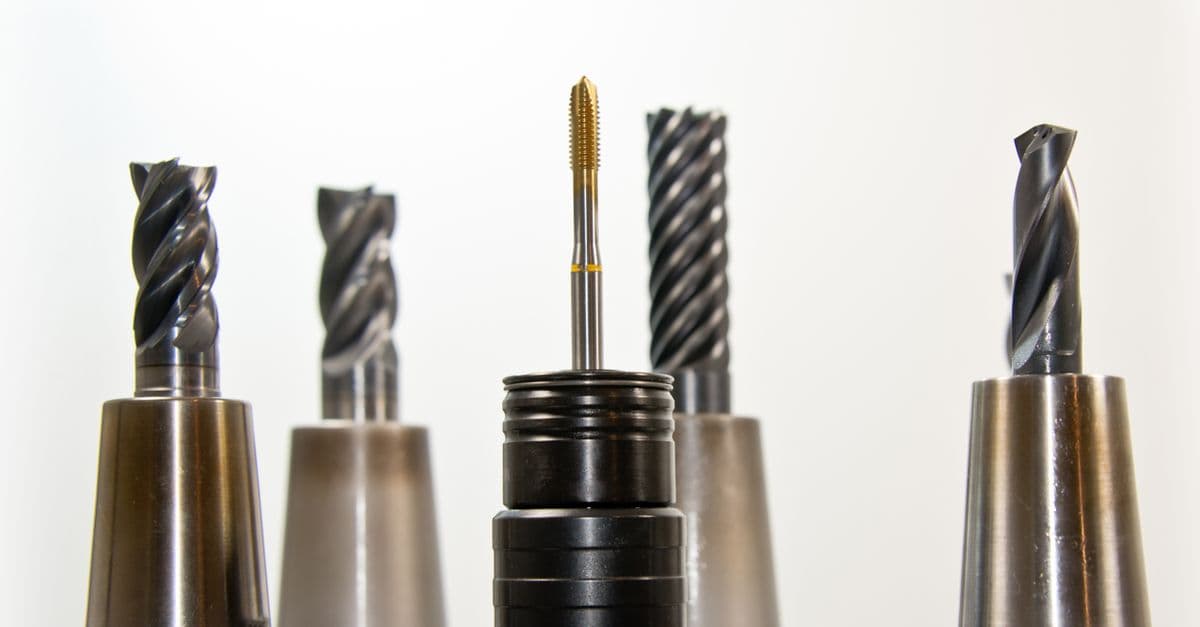
Create comprehensive tool specifications tailored to your manufacturing process, material combinations, and performance requirements. Analyze cutting speeds, feeds, tool life, and thermal behavior to predict tool performance and identify optimization opportunities. You can compare design alternatives, predict failure modes, and generate compliance documentation for production tooling decisions.
by kody-w
You can prepare complete site monitoring visit documentation, including source document verification (SDV) checklists tailored to specific case report forms, comprehensive findings reports from visit notes, and structured data query forms for identified discrepancies. This skill standardizes compliance documentation, identifies protocol deviations systematically, and creates actionable remediation plans to maintain data integrity and GCP compliance across investigator sites.
by kody-w
You can take unstructured monitoring visit observations and convert them into formal, audit-ready reports that categorize findings by risk level (Critical, Major, Minor), validate protocol compliance, and generate actionable follow-up items with assigned owners and resolution dates. The skill ensures your documentation meets FDA inspection standards and ICH-GCP requirements while creating clear escalation pathways for high-risk issues.
by kody-w
This skill analyzes CAD models and FEA results to identify design inefficiencies, stress concentrations, and manufacturing constraints. Claude provides actionable optimization recommendations, material substitutions, and cost-benefit trade-offs to accelerate your design iteration cycles. From concept review to final refinement, you get expert-level design feedback in seconds.
by kody-w