

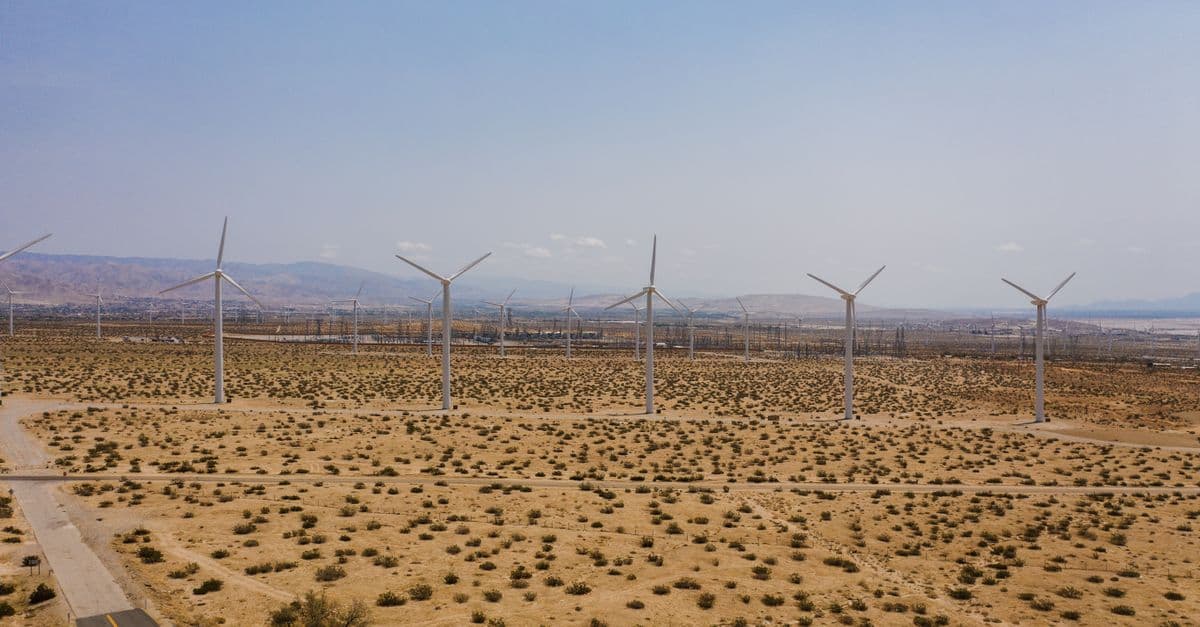
Wind Farm Micrositing & Layout Optimizer
Optimize turbine placement to maximize wind farm energy yield and minimize losses
What You Can Do
You can model how turbine positioning affects wake losses, capacity factor, and annual energy production (AEP) across your site. Claude helps you incorporate terrain complexity, prevailing wind direction, no-go zones, and spacing constraints into defensible micrositing recommendations that balance energy yield against environmental and regulatory requirements.
Features
Calculate wind speed deficits and energy penalties from turbine-to-turbine wake interactions based on spacing and prevailing wind direction
Model how ridge lines, valleys, and topographic features affect wind acceleration and optimal turbine positioning
Automatically incorporate no-go zones (wetlands, bird migration routes, property boundaries) into layout generation
Compare competing layout options and quantify AEP improvements from alternative micrositing strategies
Evaluate fixed vs. floating platform spacing constraints and seabed bathymetry impacts on turbine positioning
Generate micrositing justification reports with assumptions, trade-off analysis, and stakeholder-ready technical narratives
Apply industry spacing guidelines (typically 3–5 rotor diameters perpendicular to wind, 8–10 parallel) and flag constraint violations
Model how layout adjustments to protect sensitive habitats or minimize bird/bat risk affect energy yield
Example Output
Example 1: Greenfield Layout Optimization
Input: 2×2 km site with 10 m/s mean wind speed from NW, wetland exclusion zone, property setback requirements
Output:
- Recommended 12-turbine layout with 3.5 MW units positioned to avoid wake alignment
- Wake loss estimate: 8.2% (vs. 15.1% for grid pattern alternative)
- AEP improvement: +47 GWh/year (6.3% higher capacity factor)
- Constraint compliance: All turbines >500 m from wetlands, >100 m from property lines
Example 2: Offshore Platform Spacing
Input: Floating platform layout, 400 m water depth, 100 MW capacity, monopile foundation conflicts
Output:
- 25-turbine offshore grid with 600 m spacing (NW-SE alignment with dominant wind)
- Platform availability: 97% (reduced maintenance conflicts)
- Wake-adjusted capacity factor: 42.3% (vs. 38% for denser spacing)
- Foundation drive-time analysis: 14 days faster installation vs. compact layout
Example 3: Environmental Mitigation Layout
Input: Raptor migration corridor, spring flight path restrictions, 50 MW site
- Alternative A (12 turbines, standard spacing): 3 turbines in high-risk zone, AEP 185 GWh
- Alternative B (11 turbines, staggered rows): 0 turbines in high-risk zone, AEP 178 GWh
- Trade-off: 3.9% AEP reduction vs. eliminated avian collision risk
What's Included
- SKILL.md: Complete wind farm micrositing methodology and decision framework
- Site Data Template: Spreadsheet for inputting terrain elevation, wind speed profiles, and constraint boundaries
- Wake Loss Calculator: Reference formulae and Python snippet for Jensen/Larsen wake models
- Layout Checklist: Pre-design validation steps (wind rose analysis, exclusion zone mapping, spacing compliance)
- Micrositing Report Outline: Technical narrative structure for permitting authorities and stakeholder review
Who It's For
- Wind Farm Engineers — Micrositing and layout design for onshore and offshore projects
- Renewable Energy Developers — Feasibility and pre-design analysis for utility-scale projects
- Environmental Consultants — Trade-off analysis between energy yield and habitat protection
- Permitting/Regulatory Specialists — Documentation of layout decisions and constraint compliance
- Energy Modeling Analysts — Capacity factor forecasting and AEP optimization support
Best For
- Greenfield wind site layout concept development (pre-feasibility through detailed design)
- Wake loss modeling and turbine spacing optimization based on terrain and wind direction
- Environmental constraint mapping (no-go zones, bird/bat mitigation corridors)
- Capacity factor comparison between competing layout alternatives
- Permitting documentation and stakeholder justification of micrositing decisions
You might also like

You can input formation data, drilling fluid specifications, temperature gradients, and stress regimes to receive actionable wellbore design recommendations and risk assessments. The skill evaluates alternative well trajectories, casing programs, and drilling fluid systems specifically for geothermal conditions (150-400°C), helping you minimize non-productive time and maximize thermal productivity while navigating the unique constraints of deep, high-temperature drilling operations.
 by devsoul2026
You can rapidly prototype pumped hydro storage systems by performing gross head calculations from topographic data, optimizing reservoir dimensions for target storage durations, and selecting appropriately sized pump-turbine units. Claude guides you through penstock diameter optimization, validates operating points against IEC and IEEE standards, and generates preliminary civil works estimates and equipment specifications ready for stakeholder review or financing submissions.
by devsoul2026
You can systematically analyze pumped hydro facility performance data to pinpoint efficiency losses, calculate head losses and mechanical degradation impacts, and generate prioritized maintenance and optimization recommendations. This skill synthesizes operational metrics, equipment specifications, and hydraulic calculations to quantify the financial impact of performance degradation and justify capital expenditures for modernization or intervention.
by devsoul2026
You can develop complete wellbore architecture designs for geothermal fields by integrating formation characteristics, drilling constraints, and production objectives. The skill guides you through casing program optimization, deviated well planning, high-temperature environment design, and trade-off analysis to balance thermal access against drilling cost and risk—critical for wells operating 20-50+ years in demanding subsurface conditions.
by devsoul2026
You can diagnose mechanical faults (bearing wear, imbalance, misalignment), electrical issues (converter harmonics, magnetic suspension drift), and energy losses (windage, friction, core) in operational flywheel systems. This skill interprets vibration data, bearing temperature anomalies, and power output degradation to pinpoint root causes and recommend corrective actions. You'll optimize charge/discharge cycles, predict maintenance windows, and validate designs against grid compliance requirements.
by devsoul2026
You can rapidly generate optimized PV system designs that synthesize site characteristics, equipment specifications, electrical standards, and performance requirements into actionable array layouts and electrical configurations. This skill accelerates design iteration by systematically evaluating competing constraints—energy capture maximization, electrical loss minimization, grid code compliance, thermal management, and cost optimization—without replacing professional engineering judgment, ensuring designs align with industry best practices.
by devsoul2026
You can assess whether your compensation packages are competitive in the current market by comparing base salary, bonus targets, equity grants, and total benefits against peer company data. The skill identifies pay band drift, flags retention risks, and generates specific adjustment recommendations to improve offer acceptance rates and reduce turnover exposure for roles from individual contributors to senior leadership.
by devsoul2026
You can design robust geothermal wellbores that withstand extreme thermal gradients, high-temperature steam zones, and corrosive geothermal fluids over multi-decade production lifecycles. This skill guides you through modeling accurate temperature profiles, selecting thermally-stable casing programs, choosing drilling fluids for elevated temperatures, and calculating pressure regimes that account for hydrostatic, lithostatic, and thermal stresses. The result is engineered wellbore designs that maximize resource contact while maintaining long-term integrity and regulatory compliance.
by devsoul2026