


Seismic Hazard Assessment & Ground Motion Analysis
Evaluate earthquake risks and generate defensible seismic hazard assessments for foundation design
What You Can Do
You can leverage Claude to synthesize regional seismic hazard data from authoritative sources (USGS maps, published studies), interpret probabilistic versus deterministic earthquake scenarios, and analyze how site conditions modify ground motions. Claude helps you justify seismic design parameters to clients and regulators, evaluate liquefaction and earthquake-induced landslide risks, and develop defensible recommendations aligned with ASCE 7 and current guidelines—accelerating report preparation without replacing specialized geotechnical software.
Features
integrate USGS National Seismic Hazard Maps, published literature, and local geological studies into coherent risk profiles
compare return periods, exceedance probabilities, and design earthquake scenarios for informed decision-making
analyze how local soil conditions, bedrock depth, and geology amplify or attenuate seismic waves
translate hazard assessments into spectral accelerations, peak ground accelerations, and equivalent lateral force procedures
assess liquefaction potential, earthquake-induced landslides, and ground failure mechanisms relevant to your site
develop evidence-based narratives and comparisons to support seismic parameter selection in reports and client presentations
ensure your assessments align with ASCE 7, IBC, and current best practices in earthquake engineering
Example Output
Example 1: Regional Seismic Hazard Summary
- Site Location: Sacramento, CA (latitude/longitude)
- Peak Ground Acceleration (2% in 50 years): 0.48g
- Spectral Acceleration at 1s Period: 1.1g
- Dominant Hazard Sources: San Andreas (55%), Midway (30%), other (15%)
- Recommended Design Earthquake: Magnitude 7.0 on San Andreas at 25 km distance
Example 2: Site Response Analysis Output
- Bedrock Spectral Acceleration (1s): 1.1g
- Soil Amplification Factor (0–30 m): 1.3×
- Site-Specific Spectral Acceleration (1s): 1.43g
- Liquefaction Susceptibility: Moderate (silty sand layer 8–12 m depth)
- Recommendation: Apply site-specific PSHA or use amplified design spectra
Example 3: Design Parameter Justification
- Selected Design Spectral Acceleration: 1.2g (consistent with ASCE 7 Site Class D)
- Equivalent Lateral Force Coefficient: 0.15 (seismic design category D)
- Comparison to Similar Projects: Consistent with regional precedent (Sacramento International Airport foundation design, 2018)
What's Included
- SKILL.md instruction file with step-by-step PSHA interpretation workflow:
- Seismic Hazard Synthesis Template: structure for documenting regional hazard sources, recurrence intervals, and magnitude-distance relationships
- Ground Motion Characterization Checklist: prompts for site class determination, amplification analysis, and spectral shape assessment
- Liquefaction Risk Assessment Framework: systematic evaluation of susceptibility, triggering potential, and consequences
- Design Parameter Justification Worksheet: evidence-based template for selecting and documenting seismic coefficients per ASCE 7
Who It's For
- Geotechnical engineers designing foundations, earth dams, and underground structures in seismically active regions
- Civil engineers evaluating seismic resilience of infrastructure projects and justifying design choices to stakeholders
- Engineering geologists characterizing site-specific earthquake hazards and secondary failure mechanisms
- Structural engineers needing defensible ground motion inputs for seismic design of buildings and facilities
- Project managers and owners seeking evidence-based seismic risk assessments for decision-making and cost-benefit analysis
Best For
- Preliminary seismic hazard scoping and risk characterization for new sites
- Synthesis and interpretation of USGS seismic hazard maps and probabilistic earthquake data
- Site-specific ground motion analysis and amplification assessment based on soil profiles
- Evaluation of liquefaction, landslide, and secondary earthquake hazard potential
- Preparation of seismic sections in geotechnical reports with justified design parameters
- Comparison of deterministic versus probabilistic seismic scenarios for design trade-off studies
You might also like

Query your local Screenpipe instance to retrieve screen recordings, audio transcriptions, UI element accessibility trees, keyboard/mouse input logs, and productivity analytics. You can search by keywords, filter by content type (audio, OCR, accessibility, input), set time ranges, and extract structured data about your applications, meetings, and work sessions without sending data to external servers.
 by az9713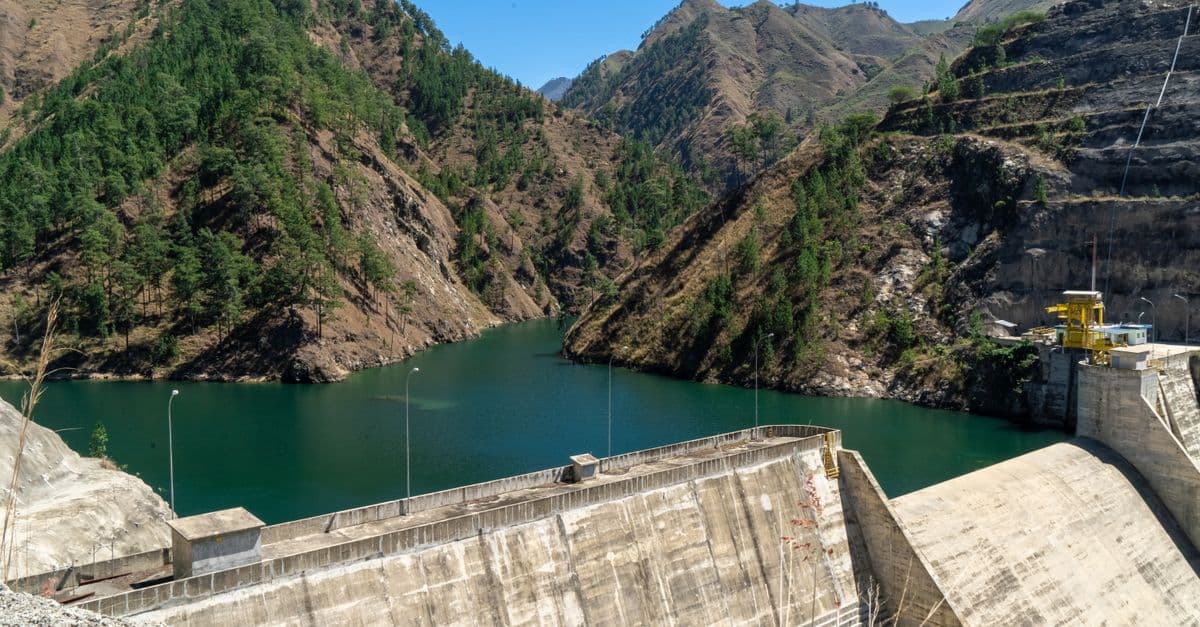
You can conduct comprehensive slope stability analyses that integrate site characterization, soil/rock properties, and quantitative calculations to evaluate both simple and complex slope geometries. The framework helps you identify critical failure mechanisms, calculate safety factors, assess groundwater and seismic effects, and develop technically defensible remediation recommendations suitable for permitting, design decisions, and stakeholder communication.
by az9713
You can systematically design test cases for any feature or system by analyzing requirements or code to extract test parameters, values, and business constraints. The skill generates a PICT model, executes pairwise testing logic to minimize test case count while maximizing coverage, and delivers a formatted test matrix with expected results—reducing manual test design effort while ensuring comprehensive scenario coverage.
by az9713
This skill deconstructs your writing samples to identify the specific patterns, personality markers, emotional range, language quirks, and formatting habits that make your voice uniquely yours. You'll receive a detailed voice DNA profile that includes your core communication style, signature phrases, emotional tone, formality level, and what you actively avoid—creating a blueprint that AI systems can use to replicate your authentic voice consistently across projects, platforms, and content types.
by az9713
You can submit architectural design documents, floor plans, and project parameters to receive a comprehensive compliance analysis that cross-references IBC, local amendments, zoning ordinances, and ADA accessibility requirements. Claude identifies specific gaps, cites applicable code sections, explains why each gap matters, and provides concrete remediation strategies—all before formal design review submission when corrections are costly and schedule-impacting.
by az9713
You can decompose complex timber structures into analyzable load paths, trace forces from applied loads through members to supports, and calculate governing demands for each structural element. This skill helps you identify critical design points, apply appropriate load factors and duration adjustments, and create defensible design documentation that satisfies code officials and peer reviewers.
by az9713
You can compare building materials across embodied carbon, water usage, recyclability, supply chain impacts, and lifecycle costs—all grounded in industry standards like EN 15804 and ISO 14040/44. This skill transforms material selection from intuition-based guessing into data-driven specification, producing analysis outputs ready for client presentations, value engineering discussions, and regulatory compliance documentation.
by az9713
You can accelerate HVAC design workflows by inputting building parameters—envelope characteristics, occupancy data, climate conditions, and existing systems—and receiving calculated heating/cooling loads, equipment sizing recommendations, and zone-by-zone analysis. Claude organizes complex building data into actionable design parameters and specification summaries for client review, permit submission, and professional validation against ASHRAE and ACCA standards.
by az9713