


Structural FEA Results Interpretation & Validation Guide
Interpret FEA results, validate against test data, and identify structural modeling errors for ae...
What You Can Do
You can rapidly review FEA stress, strain, and displacement results to spot unrealistic outputs, correlate simulation predictions with test measurements, and identify when design changes or additional testing are warranted. This skill helps you build defensible evidence packages for certification authorities (FAA/EASA/NADCAP) by documenting the correlation between analysis and physical validation, reducing certification delays and safety risks.
Features
translate complex FEA contour plots into actionable engineering decisions with confidence intervals
flag unrealistic results (stress concentrations, mesh artifacts, boundary condition errors) before they propagate through design cycles
systematically compare simulation predictions against physical test data to quantify modeling accuracy and identify root causes of discrepancies
evaluate FEA results against material limits, fatigue criteria, and composite ply failure modes for damage tolerance analysis
use predicted stress/strain fields to optimize strain gauge and load cell placement on test articles
develop data-backed rationales for knockdown factors when FEA correlations are incomplete
structure findings into regulatory-ready reports with traceability matrices and margin statements
assess whether results make physical sense for new materials, geometries, or load cases without historical precedent
Example Output
Example 1: Stress Concentration Review
- FEA predicted 85 ksi peak stress at fastener hole, but test gauge measured 62 ksi.
- Identified: mesh too coarse at stress riser (element size 0.15"), boundary condition overly rigid.
- Recommendation: remesh to 0.03" elements, apply fastener flexibility; expect FEA-test correlation within 8%.
Example 2: Composite Ply Failure Mode
- FEA matrix shear strain 4.2% at ply interface; material allowable 3.5% (knock-down applied).
- Assessment: matrix cracking initiates first; fiber-dominated strength preserved.
- Action: design margin 1.2× acceptable for certification; recommend post-test microscopy to validate ply crack arrest.
Example 3: Global Deflection Validation
- FEA wing tip deflection 3.1 inches at limit load; test measured 3.4 inches (9.7% difference).
- Root cause: fastener joint stiffness underestimated; structural damping effects not included in linear FEA.
- Resolution: adjust joint stiffness in model; nonlinear analysis recommended for load case certification.
What's Included
- SKILL.md: complete interpretation and validation framework with decision trees
- FEA Results Checklist: pre-review items (mesh quality, boundary conditions, load application, element types)
- Correlation Template: structured table for comparing FEA predictions vs. test measurements with uncertainty quantification
- Anomaly Diagnosis Flowchart: decision logic for identifying mesh artifacts, modeling errors, and material property issues
- Certification Evidence Package Outline: sections and structure for regulatory documentation (FAA/EASA/NADCAP compliance)
Who It's For
- Structural Test Engineers — validate FEA results and plan instrumentation for certification testing
- Design Engineers — review CAE outputs for feasibility and identify design optimization opportunities
- Quality Assurance/Compliance Engineers — build regulatory evidence packages with FEA-test traceability
- Materials/Processes Engineers — assess FEA performance for new material systems and material knockdown factors
- Program Managers — reduce certification cycle time by catching FEA errors early before expensive testing
Best For
- Pre-test FEA review and anomaly detection for aerospace structures
- FEA-to-test correlation studies and root cause analysis of prediction discrepancies
- Damage tolerance and fail-safe analysis documentation
- Composite material validation and ply-level failure mode assessment
- Knockdown factor development and justification for design allowables
- Instrumentation planning and test coupon design optimization
You might also like
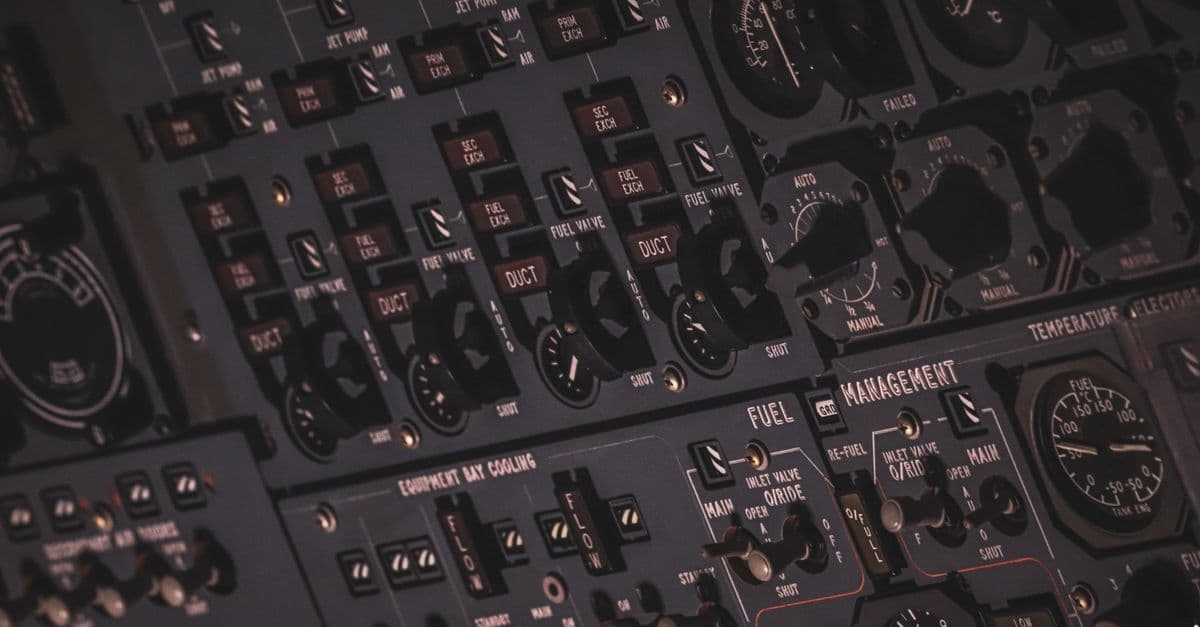
You can organize complex avionics system architecture, conduct structured Failure Mode and Effects Analysis (FMEA) across federated and integrated architectures, generate certification-ready compliance matrices, and identify design gaps against regulatory standards. Claude synthesizes requirements across documents, traces functional decomposition hierarchies, evaluates criticality assignments, and structures verification evidence to reduce design verification timeline by 30-40%.
 by a7garden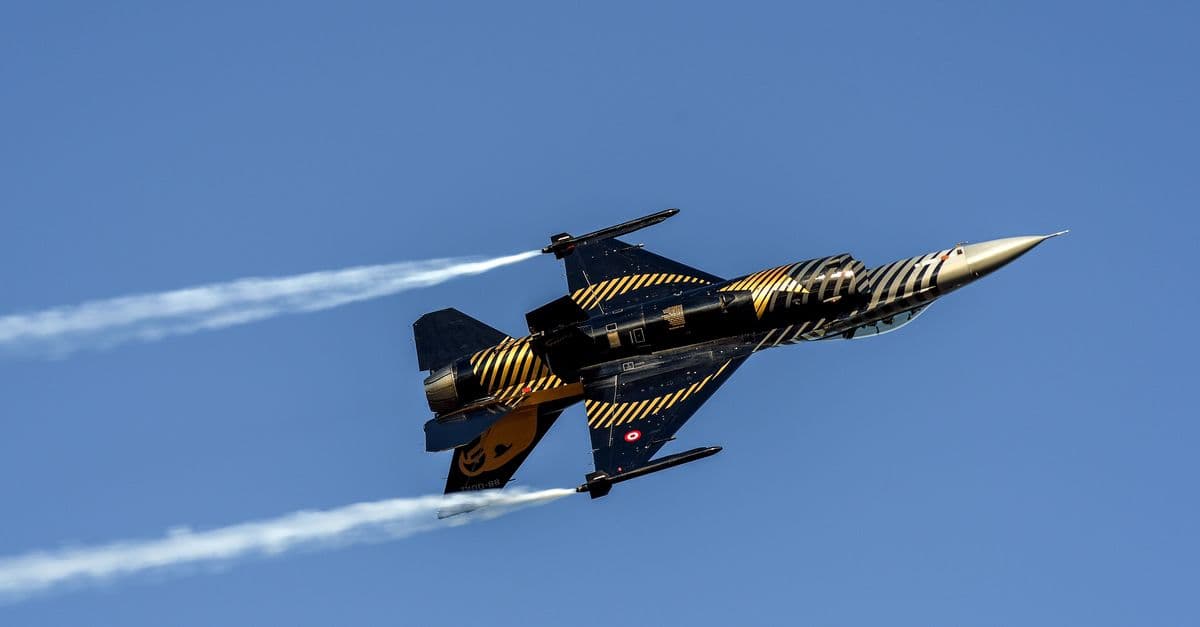
You can perform quick thermodynamic calculations from engine test data, analyze off-design operating points and surge margins, diagnose failure modes from symptom data, interpret compressor maps, and optimize thermodynamic cycles for mission profiles. This skill lets you validate assumptions, identify efficiency loss root causes, and narrow investigation scope—enabling faster problem-solving than manual spreadsheet work while complementing detailed CFD and design tools.
by a7garden
You can decompose complex avionics test failures across flight control computers, inertial measurement units, air data computers, and bus networks (ARINC 429, CAN, AFDX). The skill helps you distinguish genuine system defects from test configuration errors, measurement anomalies, and environmental artifacts—then produce failure reports with root cause confidence metrics and corrective action prioritization that satisfy both engineering rigor and aerospace certification requirements (DO-178C, DO-254, TSO standards).
by a7garden
You can systematically map dependencies between dozens of subsystems, visualize integration relationships through structured dependency matrices, quantify integration risk exposure, and generate optimal integration sequences that minimize schedule risk. This skill understands aerospace-specific challenges like avionics coupling, power distribution constraints, thermal interdependencies, and certification requirements—transforming interface specifications into actionable integration plans before hardware arrives.
by a7garden
You can analyze complex avionics test failures by feeding Claude multiple data streams—oscilloscope traces, BITE logs, CAN/ARINC 429 transcripts, and environmental parameters—to build diagnostic decision trees that prioritize root causes based on failure signatures. Claude helps you cross-reference specifications against observed behavior, identify design-versus-implementation gaps, and generate testable hypotheses with step-by-step verification procedures that accelerate failure resolution across multi-LRU (Line Replaceable Unit) systems.
by a7garden
You can systematically break down complex top-level system requirements into lower-level functional, performance, interface, and constraint requirements allocated to subsystems and components. Claude generates comprehensive traceability matrices that link customer requirements to derived requirements to verification methods, while automatically identifying conflicts, ambiguities, and infeasibilities before design begins—ensuring your requirements documentation is audit-ready for certification.
by a7garden
You can systematically diagnose avionics system failures by organizing failure symptoms into decision frameworks that consider hardware, software, and environmental factors simultaneously. The skill generates failure logic trees, maps cross-system dependencies, and produces defensible root cause analysis reports that meet FAA/EASA certification requirements. This transforms ad-hoc troubleshooting into a repeatable, auditable methodology that accelerates fault isolation and supports occurrence reporting.
by a7garden
You can master professional podcast audio editing, mixing, and mastering workflows using Audacity with Claude-guided processes that transform raw recordings into broadcast-quality episodes. Claude provides step-by-step instructions for noise reduction, multi-track mixing, dynamic range control, and mastering optimization tailored to your podcast's mic setup and distribution requirements. Automate repetitive editing tasks and achieve consistent audio quality across entire episode catalogs.
by a7garden