


Avionics Test Failure Analysis & Root Cause Diagnosis
Diagnose avionics test failures with root cause analysis and regulatory traceability
What You Can Do
You can decompose complex avionics test failures across flight control computers, inertial measurement units, air data computers, and bus networks (ARINC 429, CAN, AFDX). The skill helps you distinguish genuine system defects from test configuration errors, measurement anomalies, and environmental artifacts—then produce failure reports with root cause confidence metrics and corrective action prioritization that satisfy both engineering rigor and aerospace certification requirements (DO-178C, DO-254, TSO standards).
Features
systematically isolate failures across hardware, software, integration, test configuration, and environmental domains
identify root causes when test results are inconsistent across runs or test benches
quantify likelihood of each potential root cause (high/medium/low) with supporting evidence
generate ranked corrective actions tied to root cause probability and risk severity
map failures and corrective actions to DO-178C levels, DO-254 design assurance, and applicable TSO standards
automatically structure findings for hardware, software, and test engineering ownership
determine if failures correlate with thermal, vibration, or operational stress conditions
Example Output
Example 1: Intermittent IMU Failure
Failure: Roll rate output intermittently exceeds ±5°/sec specification during thermal cycling 0–70°C
Root Cause Analysis:
- High Confidence (85%): Temperature-dependent sensor offset drift in ring laser gyroscope — correlates with thermal ramp rate
- Medium Confidence (60%): Firmware calibration table interpolation error at boundary temperatures
- Low Confidence (20%): Test bench DAQ channel saturation during high-rate transients
Corrective Actions:
- [High Priority] Characterize gyroscope thermal coefficients across full envelope; update calibration firmware (DO-178C Level B)
- [Medium Priority] Review thermal cycling test procedure; validate sensor warm-up time (Test Configuration)
- [Low Priority] Upgrade DAQ anti-alias filter; re-verify dynamic range headroom
Example 2: ARINC 429 Bus Failure
Failure: Air Data Computer (ADC) occasionally fails to transmit barometric altitude on Label 011 during 10 Mbps bus load stress test
Root Cause Analysis:
- High Confidence (90%): ADC firmware ARINC transmit buffer overflow under sustained high-rate input conditions
- Medium Confidence (50%): Transceiver slew-rate limitation causing bit errors at maximum bus load
Corrective Actions:
- [Critical] Increase firmware transmit buffer depth; validate queue management under worst-case load (DO-178C Level A, requires full regression test)
- [High] Parallel: Verify transceiver timing margins; conduct signal integrity analysis
Regulatory Traceability: Failure maps to Flight Control System Interface SRD § 4.2.1; corrective action requires DO-254 Design Change Notice and full DO-178C level certification closure.
What's Included
- SKILL.md: Core methodology for multi-domain failure decomposition
- Failure Analysis Template: Structured worksheet with hardware/software/integration/test/environmental decomposition checklist
- Root Cause Confidence Scoring Matrix: Evidence weighting framework to quantify root cause likelihood
- DO-178C/DO-254 Traceability Checklist: Regulatory cross-reference for failure classification and certification impact
- Corrective Action Prioritization Worksheet: Risk-based ranking framework with ownership assignment and closure criteria
Who It's For
- Avionics Test Engineers — diagnose qualification and functional test failures with regulatory rigor
- Hardware Design Engineers — investigate component-level failures and thermal/vibration susceptibility
- Flight Software Engineers — analyze firmware-induced failures and real-time behavior anomalies
- Integration & Test Managers — track failure root causes and corrective action closure across multi-disciplinary teams
- Quality & Reliability Engineers — produce failure reports satisfying DO-178C/DO-254 audit requirements and supplier accountability
Best For
- Analyzing intermittent failures across multiple test runs or environmental chambers
- Generating Level A/B failure reports with full DO-178C and DO-254 traceability
- Decomposing failures in flight control, navigation, and air data systems during qualification testing
- Distinguishing genuine defects from test configuration errors and environmental artifacts
- Cross-functional failure review meetings requiring structured root cause accountability and corrective action prioritization
You might also like
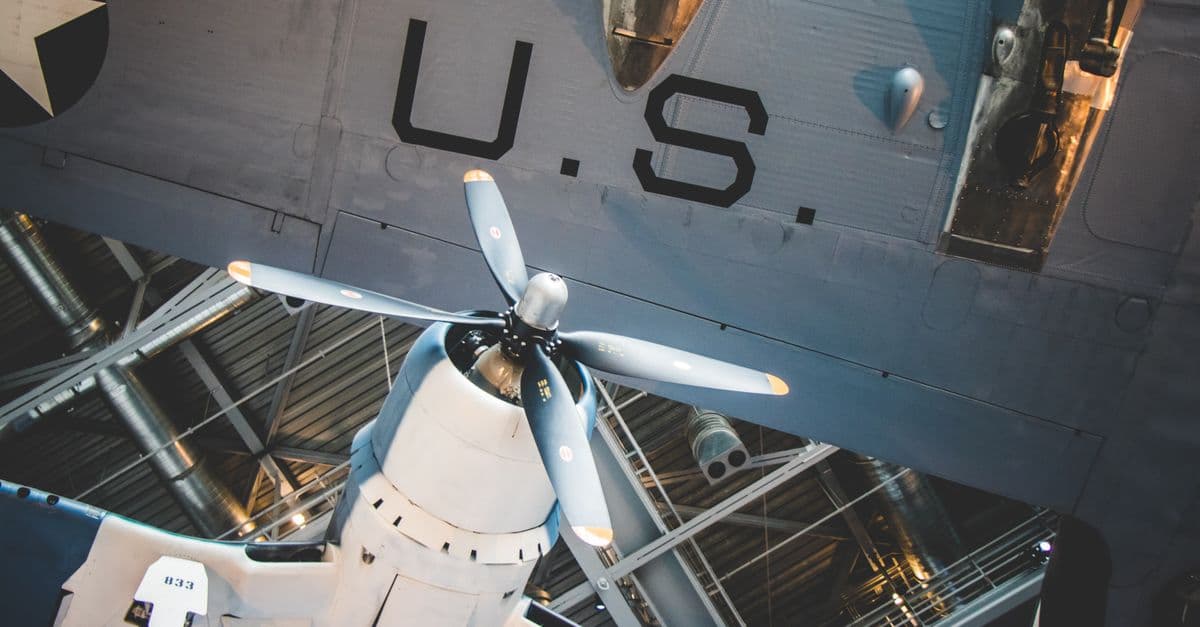
You can systematically post-process CFD simulation outputs to extract aerodynamic coefficients (CL, CD, CM) and flow separation characteristics, then cross-reference results against experimental data to validate simulation fidelity. The skill helps you distinguish between numerical artifacts and genuine aerodynamic phenomena, investigate complex flow behaviors like shock-boundary layer interactions and high-lift separation, and document aerodynamic changes between design iterations with technical confidence.
 by a7garden
You can analyze complex avionics test failures by feeding Claude multiple data streams—oscilloscope traces, BITE logs, CAN/ARINC 429 transcripts, and environmental parameters—to build diagnostic decision trees that prioritize root causes based on failure signatures. Claude helps you cross-reference specifications against observed behavior, identify design-versus-implementation gaps, and generate testable hypotheses with step-by-step verification procedures that accelerate failure resolution across multi-LRU (Line Replaceable Unit) systems.
by a7garden
You can systematically break down complex top-level system requirements into lower-level functional, performance, interface, and constraint requirements allocated to subsystems and components. Claude generates comprehensive traceability matrices that link customer requirements to derived requirements to verification methods, while automatically identifying conflicts, ambiguities, and infeasibilities before design begins—ensuring your requirements documentation is audit-ready for certification.
by a7garden
You can master professional podcast audio editing, mixing, and mastering workflows using Audacity with Claude-guided processes that transform raw recordings into broadcast-quality episodes. Claude provides step-by-step instructions for noise reduction, multi-track mixing, dynamic range control, and mastering optimization tailored to your podcast's mic setup and distribution requirements. Automate repetitive editing tasks and achieve consistent audio quality across entire episode catalogs.
by a7garden
You input ply orientations, material properties, and loading conditions, and Claude applies Classical Lamination Theory to calculate effective stiffness matrices, stress/strain distributions across each ply, and evaluate multiple failure criteria simultaneously. This enables you to screen composite layup candidates, optimize stacking sequences, and identify critical failure modes in minutes—without manual hand calculations or expensive FEA preprocessing. You get actionable design feedback, sensitivity analysis, and documentation-ready output for design reports.
by a7garden
You can perform quick thermodynamic calculations from engine test data, analyze off-design operating points and surge margins, diagnose failure modes from symptom data, interpret compressor maps, and optimize thermodynamic cycles for mission profiles. This skill lets you validate assumptions, identify efficiency loss root causes, and narrow investigation scope—enabling faster problem-solving than manual spreadsheet work while complementing detailed CFD and design tools.
by a7garden
This skill automates the creation of bidirectional traceability matrices that establish clear links between system requirements and their corresponding test cases. You can identify coverage gaps, quantify test completeness, and generate certification-ready V&V documentation that demonstrates requirement satisfaction—eliminating manual mapping errors and accelerating compliance with aerospace standards like DO-178C and DO-254.
by a7garden
You can systematically map dependencies between dozens of subsystems, visualize integration relationships through structured dependency matrices, quantify integration risk exposure, and generate optimal integration sequences that minimize schedule risk. This skill understands aerospace-specific challenges like avionics coupling, power distribution constraints, thermal interdependencies, and certification requirements—transforming interface specifications into actionable integration plans before hardware arrives.
by a7garden