

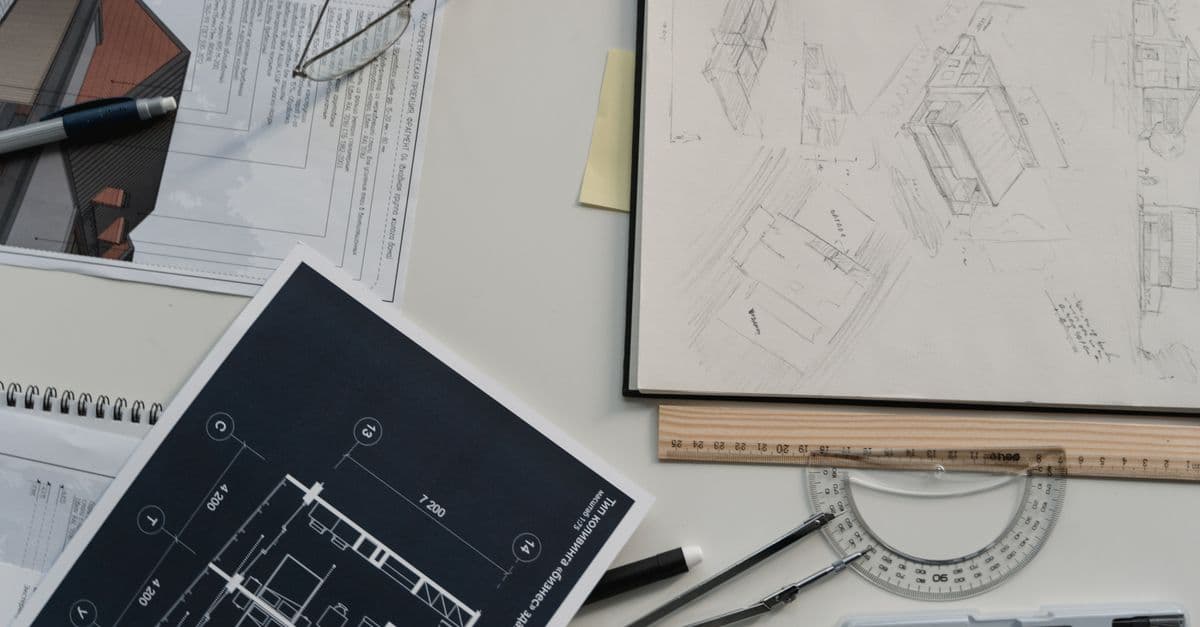
Architectural Design Brief Validator
Validate architectural briefs to catch gaps, compliance issues, and conflicts early
What You Can Do
You can submit architectural design briefs—regardless of project type or complexity—and receive a comprehensive validation that identifies gaps in technical specifications, flags compliance and regulatory risks, surfaces conflicting requirements, and generates clarifying questions for stakeholders. This catches issues when they're cheapest to fix, preventing costly design iterations and scope creep during development phases.
Features
Validates that briefs include all essential architectural components (program, site analysis, budget, timeline, regulatory context, stakeholder roles)
Flags potential violations of building codes, accessibility standards, zoning regulations, and specialized requirements (healthcare, laboratory, heritage, etc.)
Identifies contradictory scope items, incompatible constraints, and unrealistic budget-timeline-scope combinations
Reveals unstated assumptions, unaligned priorities, and potential governance issues across client groups
Generates specific clarifying questions and recommended brief amendments organized by priority and impact
Evaluates whether scope, budget, and timeline align with project complexity and local market conditions
Prioritizes identified issues by severity and cost-of-fix to guide kickoff meeting agendas
Example Output
Input: Commercial office brief (5,000 sq ft, $2M budget, 4-month timeline, downtown urban site, requires net-zero operations)
Output:
- ✓ Critical Gap: Site analysis incomplete—no geotechnical report, flood zone verification, or utility capacity assessment provided
- ✓ Compliance Risk: Net-zero goal conflicts with 4-month timeline; mechanical system design, modeling, and certification requires 6+ months minimum
- ✓ Conflict Identified: Budget of $400/sq ft is 30% below net-zero comparable projects in market; clarify if net-zero is firm requirement or aspirational
- ✓ Stakeholder Misalignment: Brief lists 3 decision-makers with no defined approval process; risk of design revisions mid-phase
- ✓ Clarifying Questions: (1) What is the geotechnical bearing capacity? (2) Is the net-zero target LEED v4.1 or third-party verified? (3) Can timeline extend to 5-6 months?
What's Included
- SKILL.md instruction file: Complete validation framework and prompt structure
- Design Brief Audit Checklist: 50+ criterion items organized by brief component (program, site, budget, compliance, stakeholder)
- Compliance Risk Matrix: Quick-reference guide to building code, accessibility, and specialized standards by project type
- Clarifying Questions Template: Pre-built question sets for different project typologies (residential, commercial, institutional, mixed-use)
- Risk Prioritization Worksheet: Framework for ranking identified issues by severity, cost-of-fix, and timeline impact
Who It's For
- Architects and design directors — Validate client briefs before committing design resources and team capacity
- Project managers — Assess brief completeness and compliance risk at project kickoff to prevent scope creep
- Design leaders and principals — Audit briefs from less experienced staff or external consultants before design charrettes
- Client-side program managers — Develop and validate internal design briefs before releasing to architects
- Facilities and real estate teams — Prepare briefs for capital projects with complex stakeholder alignment needs
Best For
- Pre-design and schematic design phase brief validation
- Multi-stakeholder projects with competing priorities or governance complexity
- Projects with specialized regulatory requirements (healthcare, laboratory, heritage, institutional)
- Budget-scope-timeline misalignment diagnosis and remediation
- Design charrette and kickoff meeting preparation
You might also like

You can rapidly audit building designs against applicable codes and regulations, identifying violations and required revisions before formal submission. This skill helps you cross-reference design elements against specific code sections, generate compliance reports with violation summaries, flag high-risk areas requiring specialist consultation, and prepare documentation for code official discussions—significantly reducing review cycles and design rework.
 by bradagi
You can input client briefs, building dimensions, departmental requirements, and adjacency needs to receive a comprehensive space program that quantifies square footage by function, identifies spatial conflicts, calculates efficiency metrics, and prioritizes areas by business criticality. This becomes your design contract—a documented baseline that prevents scope creep, justifies design decisions, and enables accurate cost estimation throughout the project lifecycle.
by bradagi
You can develop complete interior design systems for hospitality properties that account for guest psychology, housekeeping efficiency, safety regulations, and revenue metrics simultaneously. This skill helps you create guest rooms, suites, common areas, and F&B spaces with strategic spatial planning and sensory design protocols that increase guest satisfaction scores, reduce operational costs, and optimize Revenue Per Available Room (RevPAR).
by bradagiYou'll learn to architect Claude-powered automation systems that handle errors gracefully, integrate seamlessly with your stack, and optimize costs at scale. Build workflows that run 24/7 with minimal supervision, from proof-of-concept to production deployment. This skill covers prompt engineering, async patterns, error recovery, monitoring, and cost optimization so your automation stays reliable and affordable as it grows.
by bradagi
You can analyze healthcare interior design proposals across multiple regulatory frameworks simultaneously. Claude reviews spatial layouts, material selections, workflow patterns, and accessibility features against current FGI Guidelines, ADA accessibility standards, ICRA (Infection Control Risk Assessment) protocols, and state/federal healthcare facility codes. This systematic evaluation identifies compliance gaps, material risks, workflow inefficiencies, and accessibility failures before construction begins, helping you avoid costly revisions and regulatory delays.
by bradagi
You can create systematic healthcare space plans that simultaneously satisfy building codes, infection prevention requirements, clinical workflow patterns, and evidence-based therapeutic design. Claude helps you audit existing layouts against regulatory checklists, generate multiple compliant variations for stakeholder review, and identify design conflicts before specifications are finalized. You'll coordinate infection control zones, accessibility pathways, MEP infrastructure, and staff workflow patterns to deliver functional, code-compliant healing environments.
by bradagi
You can rapidly develop comprehensive space programming documents that quantify spatial requirements, define operational workflows, and establish design criteria before schematic design begins. This skill translates your hospitality venue's business objectives and guest experience vision into precise area schedules with net/gross calculations, adjacency matrices showing spatial relationships, and guest flow diagrams that guide all subsequent design decisions and ensure efficient space allocation.
by bradagi
You can extract functional requirements from client briefs, calculate realistic area allocations for each space type, establish adjacency relationships that support workflow efficiency, and verify compliance with local building codes and accessibility standards. This skill transforms vague business goals into a detailed space program that serves as your design roadmap, budget justification tool, and client negotiation reference throughout the project.
by bradagi