

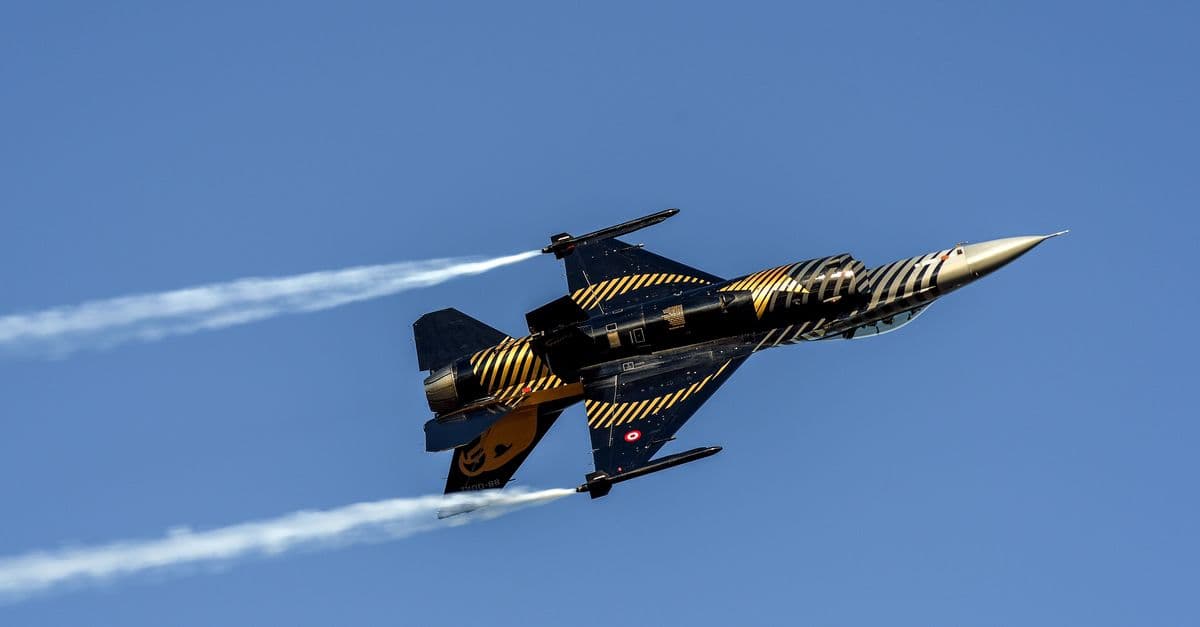
Turbomachinery Performance Analysis for Propulsion Engineers
Analyze turbomachinery performance with thermodynamic calculations and diagnostics
What You Can Do
You can perform quick thermodynamic calculations from engine test data, analyze off-design operating points and surge margins, diagnose failure modes from symptom data, interpret compressor maps, and optimize thermodynamic cycles for mission profiles. This skill lets you validate assumptions, identify efficiency loss root causes, and narrow investigation scope—enabling faster problem-solving than manual spreadsheet work while complementing detailed CFD and design tools.
Features
Extract pressure ratios, efficiency, mass flow, and work from test data in minutes
Assess feasibility and safety margins at non-rated operating conditions
Determine operating line placement, surge margin, and stall risk
Trace symptoms (vibration, temperature rise, efficiency loss) to probable root causes
Evaluate cycle changes and their performance/mission trade-offs
Calculate stability margins and predict compressor behavior
Rapidly evaluate turbomachinery options in early design phases
Generate failure analysis hypotheses and validation frameworks
Example Output
Example 1: Compressor Efficiency Loss Diagnosis
Input: Test data shows 8% drop in polytropic efficiency at 85% design speed, 2°C inlet temperature rise.
Output:
- Primary hypothesis: Fouling or erosion on compressor inlet guide vanes (IGVs)
- Secondary factors: Possible bearing temperature rise reducing blade clearance
- Recommended checks: Borescope inspection, water wash cycle, clearance verification
- Expected recovery: 4–6% efficiency restoration post-cleaning
Example 2: Surge Margin Assessment
Input: High-altitude engine test point—95% N_corrected, 0.58 pressure ratio, 145 kg/s corrected flow.
Output:
- Compressor map position: 89% of stall line (11% margin)
- Safety assessment: Acceptable for cruise, marginal for transient maneuvers
- Recommendation: Limit acceleration rate to 15°F/min or reduce weight by 2,200 kg
Example 3: Cycle Optimization Trade-off
Input: Request to increase turbine inlet temperature (TIT) by 50°C for improved thrust.
Output:
- Pressure ratio requirement: +0.8 (compressor work +12%)
- Specific fuel consumption impact: +1.2% SFC penalty
- Thermal stress increase: +8% on HPT airfoils
- Recommendation: Accept SFC penalty; prioritize cooling system validation before hardware build
What's Included
- SKILL.md instruction file with performance analysis framework and diagnostic methodology:
- Compressor map template: Standard reference sheet for pressure ratio, flow, and efficiency cross-plots
- Off-design analysis checklist: Step-by-step guide for surge margin, stall risk, and operating envelope assessment
- Failure diagnosis workflow: Structured approach linking symptoms to probable causes with validation steps
- Thermodynamic cycle calculator reference: Key equations and parameter definitions for turbomachinery analysis
Who It's For
- Propulsion engineers — Engine design, test, and diagnostics
- Compressor design specialists — Performance optimization and off-design behavior assessment
- Field service/support engineers — Troubleshooting in-service engine issues and efficiency degradation
- Systems engineers — Early-phase cycle analysis and mission-level performance trade-studies
- Failure analysis engineers — Root cause diagnosis and hypothesis validation
Best For
- Engine test data analysis and performance validation
- Compressor surge margin and off-design point assessment
- Turbomachinery failure mode diagnosis from symptom data
- Thermodynamic cycle optimization for mission profiles
- Rapid turbomachinery option comparison during concept development
You might also like
You can rapidly validate FEA model inputs, boundary conditions, and mesh strategies before expensive simulations run. Claude analyzes your model documentation, interprets stress concentrations and failure predictions against design criteria, maps results to certification requirements (FAA Part 23/25, DO-254, MIL-STD-1916), and identifies root causes for convergence issues or anomalous results. This compresses the 20-30% of analysis time typically spent on verification and documentation.
 by a7garden
You can rapidly examine thousands of instrumentation parameters across multiple test points to isolate unexpected behaviors and their origins. Claude structures the detective work: asking conditional questions about parameter relationships, flagging impossible states, isolating anomaly emergence moments, and building logical chains connecting symptoms to root causes. The output produces defensible technical justifications suitable for FAA or military certification packages and flight test reports.
by a7garden
You can analyze static and fatigue test data from aerospace components, distinguish between real failure modes and test artifacts, establish statistical confidence in results, and generate certification-ready engineering reports. The skill helps you interpret physical behavior under load, determine root causes of structural failures, and validate finite element predictions against test evidence—enabling design review boards and certification authorities to make informed decisions.
by a7garden
You can conduct rapid fatigue life assessments, apply damage tolerance principles per AC 25.571-1D methodology, and predict residual strength of aircraft structures under cyclic loading. This skill organizes fatigue data interpretation, applies appropriate failure theories, calculates safety margins, and documents analysis assumptions for certification compliance—reducing analysis time while maintaining the rigor required for structural certification and service life determination.
by a7garden
You can master professional podcast audio editing, mixing, and mastering workflows using Audacity with Claude-guided processes that transform raw recordings into broadcast-quality episodes. Claude provides step-by-step instructions for noise reduction, multi-track mixing, dynamic range control, and mastering optimization tailored to your podcast's mic setup and distribution requirements. Automate repetitive editing tasks and achieve consistent audio quality across entire episode catalogs.
by a7garden
You can systematically diagnose avionics system failures by organizing failure symptoms into decision frameworks that consider hardware, software, and environmental factors simultaneously. The skill generates failure logic trees, maps cross-system dependencies, and produces defensible root cause analysis reports that meet FAA/EASA certification requirements. This transforms ad-hoc troubleshooting into a repeatable, auditable methodology that accelerates fault isolation and supports occurrence reporting.
by a7garden
You can rapidly review FEA stress, strain, and displacement results to spot unrealistic outputs, correlate simulation predictions with test measurements, and identify when design changes or additional testing are warranted. This skill helps you build defensible evidence packages for certification authorities (FAA/EASA/NADCAP) by documenting the correlation between analysis and physical validation, reducing certification delays and safety risks.
by a7garden
You can analyze complex avionics test failures by feeding Claude multiple data streams—oscilloscope traces, BITE logs, CAN/ARINC 429 transcripts, and environmental parameters—to build diagnostic decision trees that prioritize root causes based on failure signatures. Claude helps you cross-reference specifications against observed behavior, identify design-versus-implementation gaps, and generate testable hypotheses with step-by-step verification procedures that accelerate failure resolution across multi-LRU (Line Replaceable Unit) systems.
by a7garden