

Sensor Fusion Diagnostic Analyzer
Diagnose sensor fusion failures and validate multi-modal ADAS/AV perception alignment

What You Can Do
You can pinpoint the exact source of sensor fusion failures—whether they stem from misaligned camera/LiDAR/radar extrinsic calibration, timestamp desynchronization, data validation gaps, or algorithmic issues. This skill decomposes multi-modal perception errors into sensor-specific contributions and generates quantifiable diagnostic reports that directly guide calibration and testing teams toward fixes rather than blind troubleshooting.
Features
Cross-checks camera, LiDAR, and radar spatial alignment consistency to identify offset or rotation misalignments
Detects timestamp desynchronization patterns that cause positional discrepancies between sensor modalities
Decomposes multi-modal perception failures into individual sensor contributions for targeted diagnostics
Validates sensor data integrity, missing values, and outlier patterns that indicate upstream data pipeline issues
Maps detection failures to specific environmental conditions (rain, night, low-contrast) to isolate modality-dependent sensitivities
Produces structured root-cause analyses with quantifiable metrics and prioritized remediation recommendations
Compares pre/post-calibration update behavior to confirm whether changes resolved or introduced fusion failures
Prioritizes failures across sensor firmware, extrinsic calibration, and fusion algorithm domains for production issue response
Example Output
Example 1: Extrinsic Calibration Mismatch
Fusion Diagnostic Report
─────────────────────────
Failure Mode: Lateral offset in camera-LiDAR detections
Detected Root Cause: Extrinsic calibration (camera → vehicle frame)

Findings:
• Camera detections laterally offset +0.23m vs. LiDAR ground truth
• Rotation error around Z-axis: +2.1° (exceeds 0.5° threshold)
• Timestamp alignment: ✓ Within 40ms tolerance
• Data quality: ✓ No missing frames or outliers

Recommendation: Re-run camera extrinsic calibration using checkerboard/object targets. Prioritize rotation correction before lateral adjustment.
Example 2: Timestamp Desynchronization
Detected Root Cause: Temporal synchronization (LiDAR → CAN bus)

Findings:
• LiDAR frame timestamps drift +120ms relative to camera sync pulse
• Failure occurs predictably when vehicle speed >40 km/h (increased motion sensitivity)
• Pattern: ~100ms lag grows to ~150ms under acceleration
• Extrinsic calibration: ✓ Validated (within tolerance)

Recommendation: Check LiDAR PPS (pulse-per-second) synchronization to CAN/RTC clock source. Firmware update may be required.
What's Included
- SKILL.md instruction file with sensor fusion diagnostic methodology:
- Extrinsic Calibration Validation Checklist: step-by-step camera/LiDAR/radar alignment verification
- Temporal Synchronization Diagnostic Template: timestamp correlation analysis and drift detection
- Root-Cause Attribution Worksheet: structured decision tree to isolate calibration vs. algorithmic failures
- Perception Failure Condition Classifier: environmental mapping and modality-specific sensitivity matrix
- Diagnostic Report Template: production-ready format with quantified findings and remediation priority
Who It's For
- ADAS/AV Perception Engineers — diagnosing and validating multi-modal sensor fusion stack failures in development and production
- Sensor Calibration Specialists — root-cause analysis to determine whether extrinsic calibration updates are required
- OTA Software Engineers — triaging production perception issues and prioritizing firmware/calibration vs. algorithm fixes
- Test & Validation Engineers — correlating test log failures to specific sensor modality misalignments
- Systems Integration Leads — determining impact scope of sensor or fusion algorithm changes across the perception pipeline
Best For
- Troubleshooting spatial inconsistencies between camera and LiDAR detections (offset positions, rotation errors)
- Validating extrinsic calibration after hardware replacement, maintenance, or calibration updates
- Identifying temporal synchronization failures causing detection dropout or false positives in specific speed ranges
- Mapping perception failures to environmental conditions to isolate modality-dependent issues (weather, lighting, contrast)
- Prioritizing production OTA issues between sensor firmware, extrinsic calibration, and fusion algorithm domains
You might also like
You can analyze multi-dimensional steering system performance including torque characteristics, self-alignment torque, steering angle feedback, road feel transmission, and torque vectoring effects. Extract actionable insights from simulation and test data to identify root causes of steering feel issues, then develop tuning recommendations for steering gear ratios, EPS algorithms, suspension geometry effects, and torque vectoring control strategies.

This skill helps you architect platform strategy by generating decision frameworks, prioritization matrices, and roadmap plans that account for developer ecosystem impact. You'll analyze tradeoffs between breaking changes, feature velocity, and technical debt to make confident platform decisions. It synthesizes developer feedback, competitive positioning, and business goals into actionable strategic outputs that your team can execute.
You can design complete AUTOSAR 4.x system architectures by automating component allocation across abstraction layers, modeling port interactions and service interfaces, and validating compliance with AUTOSAR standards. Claude helps you create standardized architecture documentation, detect circular dependencies and interface mismatches, and generate port interaction matrices—accelerating ECU architecture development while ensuring standards adherence.
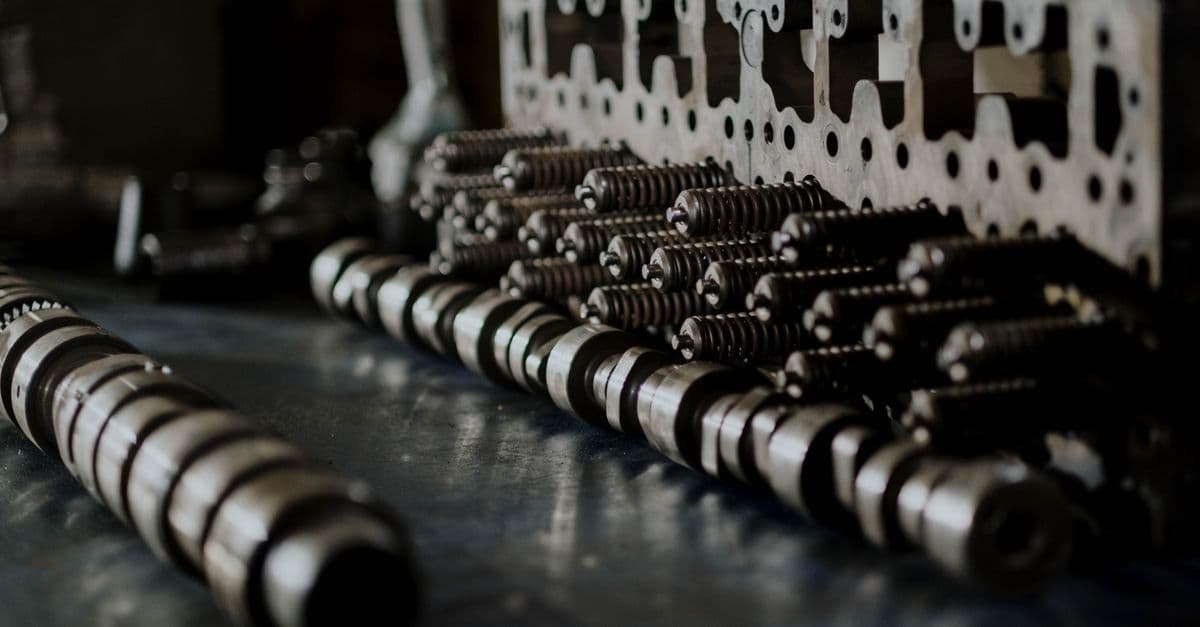
You can efficiently diagnose complex NVH concerns by working through a structured framework that correlates customer symptoms with potential powertrain failures. This skill helps you narrow diagnostic possibilities, recommend targeted testing sequences, distinguish between component failures and tuning issues, and substantiate warranty claims with technical evidence.
You can model transient and steady-state thermal behavior in EV power electronics, calculate junction temperature rise during driving cycles, and design cooling strategies that meet automotive thermal specifications. This skill helps you size heat sinks, evaluate thermal interface materials, compare active versus passive cooling approaches, and validate designs against AEC-Q200 and ISO 16750-3 standards.

You can validate AUTOSAR software architectures across multiple compliance dimensions—layer separation, component interfaces, port definitions, service interfaces, and communication semantics. The skill identifies structural violations, missing documentation artifacts, and compliance gaps early in the design phase, helping you catch issues before formal gates and functional safety audits. It generates architecture compliance reports and documentation needed for ISO 26262 functional safety reviews.

You can evaluate simulation scenarios against functional safety and SOTIF requirements, identify untested edge cases and high-risk operational design domains, map failure modes to root causes, and generate traceability matrices linking requirements to validation results. This skill transforms raw simulation data into defensible technical documentation that demonstrates test completeness and readiness for real-world deployment.

You can quantify sensor fusion performance across object detection, classification, tracking, and localization using standardized metrics. The framework helps you identify systematic failure modes in diverse environmental conditions, document safety-critical gaps, and generate structured evidence packages for ISO 26262 and SOTIF compliance. This enables you to benchmark sensor configurations, define perception KPIs, and support regulatory submissions with rigorous performance documentation.