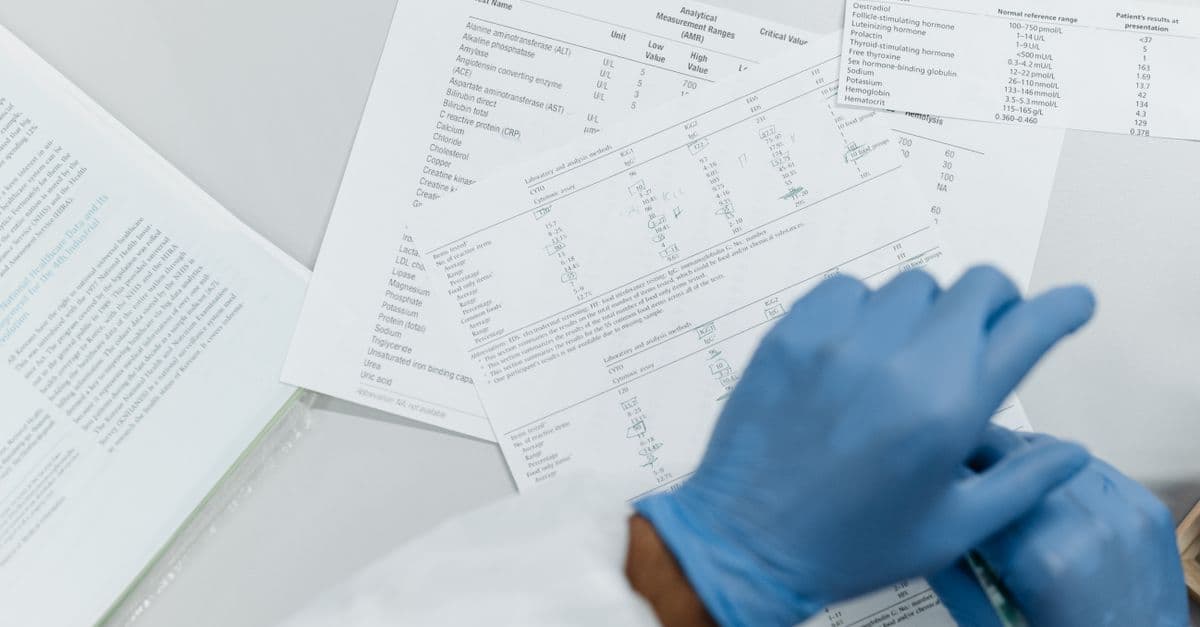
Research Data Collection Design & Validation
Design validated data collection protocols for reproducible research

What You Can Do
Generate rigorous data collection instruments, protocols, and validation frameworks tailored to your research design. You'll get customized questionnaires, interview guides, measurement scales, quality assurance checklists, and detailed documentation that ensures consistency, reproducibility, and compliance with research standards.
Features
Create comprehensive data collection protocols with standardized procedures, step-by-step instructions, contingency plans, and quality gates to ensure consistency across all data collection phases
Design validation strategies specific to your instrument type (surveys, interviews, observations, sensors) including reliability testing, validity checks, and calibration procedures
Build systematic approaches to identify, log, and mitigate data quality issues before they compromise your dataset, including validation rules and data cleaning workflows
Develop sampling strategies and comprehensive metadata schemas that document all collection conditions, assumptions, and contextual variables needed for reproducibility
Generate practical, role-specific checklists for data collectors, reviewers, and analysts to verify accuracy, completeness, and compliance at every step
Create detailed record-keeping templates and documentation standards that enable other researchers to replicate your data collection methodology exactly
Ensure your protocols meet institutional review board (IRB) requirements, disciplinary standards, open science practices, and funder reporting guidelines
Example Output
Data Collection Protocol Example:
Structured Interview Protocol – Employee Retention Study
Pre-Interview Setup
- Equipment: Audio recorder, backup device, consent forms (3 copies)
- Environment: Quiet space, private, temperature-controlled
- Duration: 45–60 minutes
Interview Flow
- Opening (5 min) — Consent review, confidentiality assurance, recording consent
- Background (10 min) — Role, tenure, department (standardized questions)
- Core Topics (25 min) — Probing questions with follow-up strategies
- Closing (5 min) — Optional comments, next steps, thank you
Validation Checklist
- Audio quality clear (test before each session)
- All questions asked verbatim (note any deviations)
- Follow-up probes used when responses vague
- Interviewer neutrality maintained (no leading language)
- Total time within 45–60 minute window
Measurement Scale Validation Template:
| Construct | Item | Scale | Reverse-Coded? | Reliability Method | Expected Cronbach's α |
|---|---|---|---|---|---|
| Engagement | "I feel connected to my work" | 1–5 Likert | No | Internal consistency | >0.70 |
| Burnout | "My work is emotionally exhausting" | 1–5 Likert | No | Test-retest (2 weeks) | >0.75 |
Data Quality Report (Post-Collection):
- ✅ Completion Rate: 94% (47/50 surveys)
- ✅ Response Time: 8–22 minutes (within expected range)
- ✅ Missing Data: <2% across items
- ⚠️ Outliers Detected: 2 cases flagged for review (response times >45 min)
- ✅ Metadata Logged: Collection date, location, collector ID all recorded
What's Included
- Protocol Template Library: Ready-to-customize templates for surveys, interviews, focus groups, observational checklists, and experimental procedures
- Validation Strategy Guide: Frameworks for assessing reliability (internal consistency, test-retest, inter-rater), validity (construct, criterion, convergent), and measurement error
- Quality Assurance Checklists: Role-specific checklists for data collectors, supervisors, and analysts covering procedural compliance, accuracy verification, and completeness
- Metadata & Documentation Standards: Schemas for recording collection conditions, operator notes, equipment calibration, environmental factors, and deviation logs
- Error Mitigation Workflows: Systematic procedures for detecting anomalies, documenting data quality issues, and implementing corrections with full audit trails
- Reproducibility & Compliance Checklist: Verification tools for IRB alignment, open science requirements, funder reporting, and disciplinary methodology standards
Who It's For
- Academic Researchers
- Graduate Students & Postdocs
- Survey & Questionnaire Designers
- Research Coordinators & Project Managers
- Data Scientists in Research Contexts
Best For
- Designing and validating survey instruments
- Creating structured interview and focus group protocols
- Developing quality assurance procedures for longitudinal studies
- Building reproducible observational or experimental methods
- Ensuring IRB and open science compliance
You might also like

This skill transforms raw field observations into structured research data with built-in reproducibility. You can create standardized data collection templates, synthesize observations into coherent findings, and maintain complete audit trails that document every decision and change. The result is field research that's verifiable, defensible, and ready for analysis or publication.
Collect raw field research data—interview transcripts, survey responses, observation notes—and Claude will synthesize it into organized findings, identify patterns, and generate code or documentation automatically. You provide the raw data and research questions; Claude handles analysis, categorization, and artifact generation.

Claude helps you design sound experiments from scratch, validate your methodology against established best practices, and identify potential flaws before you spend resources on implementation. You'll get a reproducible protocol, statistical power analysis, and a comprehensive checklist of control variables and potential confounds—ensuring your experiment produces reliable, actionable results.

Transform raw research data, notes, and preliminary findings into a complete, publication-ready manuscript. This skill handles the entire manuscript architecture—from organizing results into Methods and Results sections to crafting a compelling Abstract and Discussion that positions your findings in context. You provide the data and key insights; Claude accelerates the structuring, drafting, and refinement phases so you can focus on science rather than formatting.

Accelerate literature reviews by automatically synthesizing research papers, extracting key methodologies and findings, and identifying research gaps. This skill analyzes multiple papers simultaneously to spot unexplored areas, methodological blind spots, and emerging opportunities in your field. You'll get structured analysis, comparison matrices, and research landscape summaries that would normally take weeks to produce manually.

This skill helps you transform scattered research papers into a coherent synthesis that identifies knowledge gaps, establishes research context, and builds compelling narratives for proposals and publications. You'll analyze methodology, trace citation influence, detect emerging trends, and extract actionable insights from complex literature collections without manually reading every paper.

Turn your pile of research articles and notes into a structured, synthesized literature review. This skill helps you organize findings by theme, identify contradictions and research gaps, compare methodologies across studies, and generate synthesis templates ready for publication. You'll create clear visual maps of your research landscape and spot opportunities for original contribution.
You can transform a scheduled expert interview into a strategic session by mapping your source's public record, incentives, and known positions, then building a tiered question architecture that moves from foundational to provocative with built-in pivots. Claude helps you anticipate likely evasions, scripts pre-emptive follow-ups, flags attribution constraints, and designs your interview flow for narrative payoff—not just information collection.