


Event-Driven Investment Catalyst Analysis Framework
Analyze event-driven investment catalysts with probability-weighted risk/reward models
What You Can Do
You can rapidly analyze corporate catalysts—mergers, bankruptcies, restructurings, regulatory decisions, and special situations—to uncover price dislocations and asymmetric payoff opportunities. This skill structures your catalyst research, quantifies probability-weighted outcomes, assesses execution risk and deal mechanics, and identifies mispriced event risk before consensus recognition. You'll synthesize multi-source event information and stress-test your investment thesis against alternative scenarios.
Features
Systematically identify corporate events, regulatory catalysts, and market dislocations with timeline mapping and second-order catalyst detection
Model base-case, bull-case, and bear-case scenarios with explicit probability assignments and payoff asymmetry analysis
Evaluate deal mechanics, regulatory approval risk, financing risk, and timeline compression to quantify event execution probability
Calculate merger arbitrage spreads, restructuring recovery rates, and position sizing implications based on risk-adjusted returns
Integrate SEC filings, press releases, competitor context, and management guidance into coherent investment theses
Challenge assumptions with alternative outcome scenarios, identify key value drivers, and surface hidden risks before capital deployment
Rank catalysts by asymmetry ratio, conviction level, and execution certainty to prioritize opportunity analysis
Example Output
Example 1: Merger Arbitrage Analysis
- Target: Acme Corp acquisition by BidCo Inc. announced at $50/share
- Current spread: $1.25 (2.5%)
- Base case (75% probability): Deal closes in 9 months at $50 = 3.3% annualized return
- Bear case (20% probability): Regulatory delay, deal closes in 15 months at $49.50 = -1.0% annualized return
- Tail risk (5% probability): Deal breaks, stock falls to $38 = -24% loss
- Probability-weighted return: 1.8% annualized with asymmetric downside
- Execution risk: FTC approval timeline and foreign investment screening
Example 2: Special Situation Catalyst
- Company: XYZ Industries activist-targeted for spinoff, $2.1B enterprise value
- Primary catalyst: Activist proxy fight (Q2), board election (Q3), spinoff announcement (Q4)
- Upside case: Spinoff trades at 2.0x revenue (vs. conglomerate 1.2x) = $8.50/share vs. current $6.20
- Timeline: 18-month path to value realization with quarterly binary inflection points
- Risk factors: Management resistance, market conditions delay, execution fumbles in spinoff process
What's Included
- SKILL.md instruction file with catalyst framework, decision checklist, and context window optimization:
- Catalyst Analysis Template: Structured worksheets for event classification, probability modeling, and scenario analysis
- Risk Assessment Checklist: Execution risks, regulatory/legal contingencies, financing risk, and deal mechanics validation
- Probability-Weighted Payoff Model: Spreadsheet-friendly formulas for base/bull/bear case quantification and return asymmetry scoring
- Thesis Stress-Test Framework: Scenario alternative outcomes, key assumption sensitivity analysis, and conviction ranking matrix
Who It's For
- Hedge fund analysts and portfolio managers evaluating event-driven opportunities
- Merger arbitrage specialists analyzing M&A spreads and deal execution risk
- Special situations investors identifying corporate restructurings and activism catalysts
- Long/short equity managers incorporating discrete catalysts into position sizing
- Investment bankers and corporate development professionals modeling deal outcomes
Best For
- Analyzing merger arbitrage opportunities and deal spread quantification
- Evaluating restructuring recoveries and Chapter 11 emergence scenarios
- Assessing activist campaigns and proxy fight catalysts
- Modeling regulatory outcomes and approval probability timelines
- Identifying second-order catalysts and consensus blindspots in special situations
You might also like

You can decompose complex corporate catalysts—mergers, restructurings, regulatory decisions, bankruptcies—into probabilistic outcome trees with timeline-based inflection points. Claude models post-event price discovery across multiple scenarios, quantifies risk-adjusted returns, and documents investment theses with transparent reasoning chains that identify alpha opportunities while stress-testing against consensus views and tail risks.
 by fission
You can analyze equity charts to identify continuation patterns (flags, pennants, triangles), reversal patterns (head-and-shoulders, double tops/bottoms), and momentum breakouts using rule-based frameworks. Claude applies consistent validation criteria to assess pattern strength, calculate precise risk/reward ratios based on pattern geometry, and identify early invalidation signals that trigger stop-loss placement—transforming subjective chart reading into systematic, probability-weighted trading decisions.
 by steelmorgan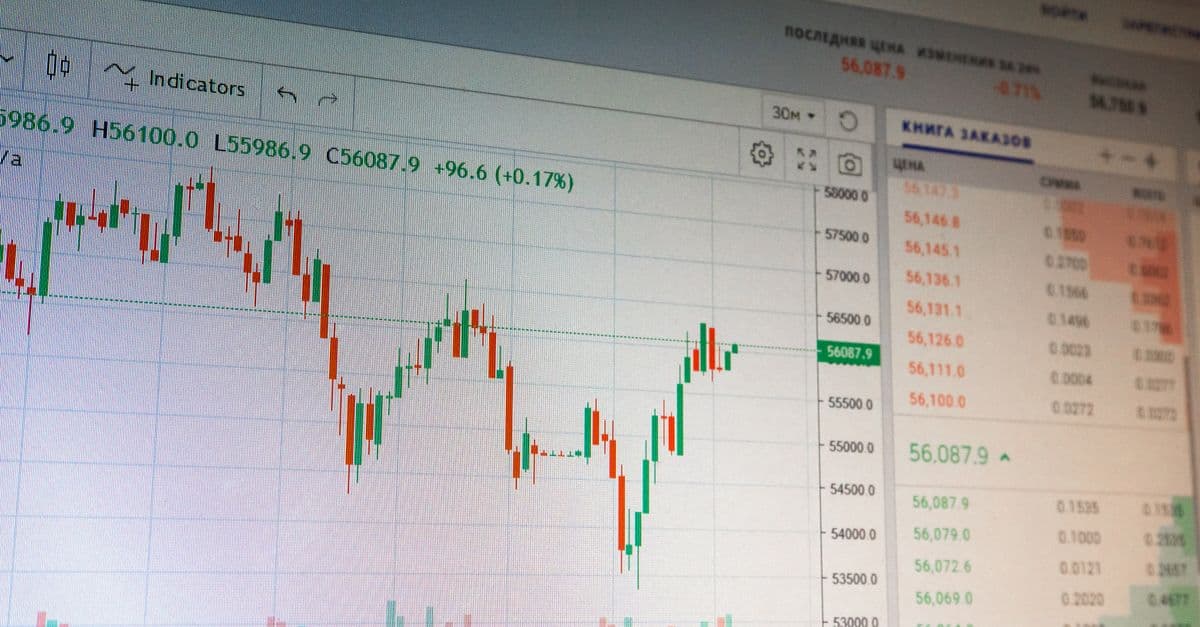
You can conduct deep-dive REIT financial analysis by translating GAAP accounting into real estate-specific valuation frameworks. The skill helps you calculate Funds From Operations, compare price-to-NAV ratios across property sectors, assess distribution sustainability, identify red flags in quarterly earnings, and evaluate comparable company multiples within residential, office, retail, industrial, or healthcare property segments. You'll produce institutional-grade investment recommendations backed by quantified risk metrics and confidence intervals.
by steelmorgan
You can transform fragmented ESG data from multiple vendors (MSCI, Sustainalytics, Bloomberg) into cohesive integration frameworks that clearly map ESG factors to investment thesis and financial outcomes. This skill helps you identify data conflicts, resolve vendor discrepancies, establish materiality-weighted scoring systems, and document audit trails that demonstrate defensible ESG integration decisions to institutional investors and regulators.
by steelmorgan
This skill accelerates your alternative asset evaluation by organizing complex fund assessments across hedge funds, private equity, real assets, and structured products into standardized, comparable frameworks. You can evaluate manager capability, operational infrastructure, fee alignment, and risk exposure while automatically flagging red flags—reducing cognitive load and maintaining institutional-grade rigor across disparate asset classes.
by steelmorgan
You can rigorously validate algorithmic trading strategies by decomposing backtest performance, identifying which components drive returns, and stress-testing robustness across market regimes. This skill exposes hidden validation gaps—like curve-fitting bias and survivorship errors—that cause live trading failures, helping you separate genuine alpha from statistical artifacts before deploying capital.
by steelmorgan
You can rapidly assess material corporate events—mergers, bankruptcies, restructurings, regulatory decisions—and quantify their probable impact on security valuations. The skill decomposes idiosyncratic catalysts with defined timelines into discrete financial outcomes, calculates probability-weighted returns across scenarios, and compares opportunity quality across portfolio candidates to justify position sizing within portfolio risk constraints.
 by skillslib
You can construct institutional-grade healthcare valuation models that properly weight clinical and regulatory event risk. This skill teaches you to integrate disease-state economics (market sizing, competitive positioning), probability-adjusted NPV calculations for clinical programs, and financial runway analysis into cohesive price targets. You'll generate transparent bull/base/bear scenarios tied to specific clinical readout dates and regulatory milestones that institutional investors expect.
by steelmorgan