


Infotainment UX Requirement Analyzer
Transform infotainment user needs into rigorous specs and interaction flows
What You Can Do
You convert business goals and user research into measurable acceptance criteria for infotainment features, mapping interaction flows across driver contexts (stationary, driving, parked). The skill identifies safety/usability conflicts against NHTSA and EU regulations, flags hardware dependencies across vehicle generations, and surfaces integration points with CAN bus, steering controls, and vehicle systems before handoff to engineering.
Features
breaks fuzzy user needs into testable acceptance criteria with measurable success metrics
documents feature behavior across stationary, driving, and parked states with driver distraction guardrails
flags NHTSA visual distraction limits, EU EN 61039 compliance gaps, and usability tradeoffs with regulatory solutions
identifies constraints from infotainment unit capabilities, screen resolution, processor power, and vehicle generation variance
surfaces CAN bus requirements, steering wheel control mapping, climate system handshakes, and third-party service dependencies
translates competitor feature behavior into your own specification format for feature parity analysis
produces testable scenarios and edge cases for QA and validation teams
documents hardware prerequisites and graceful degradation paths for phased vehicle rollouts
Example Output
Example 1: Navigation Feature Requirement
User Need: "Driver wants turn-by-turn without taking eyes off road"
Decomposed Specs:
- ✅ Acceptance: Voice guidance available for all turn types within 500m notice (no visual-only turns)
- ✅ Hardware: Requires speaker output >60dB; graceful fallback for vehicles without gesture control
- ✅ Safety: Visual alerts limited to 2-second glances; triggers haptic steering wheel pulse if engaged >5s
- ✅ Integration: Pulls route from vehicle GPS (CAN 0x100), responds to steering wheel next/prev buttons
- ✅ Test Case: Driver receives voice prompt + haptic pulse 500m before turn while vehicle speed >25mph
Example 2: Climate Control UX Update
User Need: "One-touch climate presets should save seat heat + cabin temp"
Decomposed Specs:
- ✅ Acceptance: Driver creates/recalls preset in <3 taps; seat heat + temp restore to ±1°C within 10s
- ✅ Hardware: Requires dual-zone climate (some trims have single zone—document feature unavailability)
- ✅ Safety: Preset UI only accessible when vehicle in Park or stopped >2s
- ✅ Integration: Reads cabin temp from CAN 0x4F2, seat heater PWM from module 0x750
- ✅ Test Case: Parked vehicle; driver saves preset with 68°F, 40% seat heat; next drive recalls and verifies within spec
What's Included
- SKILL.md: Instruction file with requirement decomposition framework and safety/hardware mapping templates
- Requirement Specification Template: Structured format (user need → acceptance criteria → hardware/safety/integration constraints)
- Interaction Flow Mapper: Context-based diagram generator for stationary/driving/parked states with distraction guardrails
- Safety Compliance Checklist: NHTSA visual distraction limits, EU EN 61039 validation, and regulatory conflict resolution matrix
- Integration Dependencies Worksheet: CAN bus signals, steering wheel controls, climate/navigation/media handshake points
- Acceptance Test Case Library: Edge cases, hardware variance scenarios, and rollout validation matrices
Who It's For
- Connected Car Product Managers — translating user research and business requirements into engineering-ready specifications
- Infotainment UX Designers — validating feature concepts against safety regulations and hardware constraints before detailed design
- Automotive Requirement Engineers — documenting testable specs and integration dependencies for cross-functional handoffs
- Vehicle Electrical Engineers — identifying CAN bus signals, hardware prerequisites, and graceful degradation paths
- Product Strategy Teams — planning feature rollouts across vehicle generations and managing competitive feature parity
Best For
- Defining new infotainment features (navigation, music, messaging, climate, comfort controls) with safety-aware specifications
- Competitive feature analysis — translating competitor behavior into measurable requirements for your vehicle
- Resolving conflicts between desired UX and NHTSA/EU regulatory limits on driver distraction
- Planning phased feature rollouts across vehicle generations with different hardware capabilities
- Creating acceptance test cases and validation criteria before engineering development begins
- Managing handoffs between user research, product, and engineering teams with conflict-free specifications
You might also like

You can rapidly synthesize V2X technical requirements across automotive safety standards, wireless protocols (DSRC/802.11p, C-V2X, 5G), infrastructure readiness, and regulatory frameworks. The skill generates structured PRDs, protocol compatibility matrices, and deployment decision trees that account for vehicle hardware, roadside infrastructure (RSUs), backend systems, and OTA delivery pipelines—helping you navigate fragmented ecosystems (DSRC vs. C-V2X pilots, regional regulations, multi-generation vehicle platforms) and translate business objectives into executable technical roadmaps.
 by alex1980alex
You can systematically analyze demand forecasts, driver availability, and geographic utilization patterns to identify supply-demand imbalances and recommend fleet adjustments. The skill models pricing scenarios, evaluates service expansion impacts, and structures driver incentive programs—enabling you to maximize revenue per available vehicle hour (RPVH), reduce wait times, and improve operational efficiency across your service areas.
by alex1980alex
You can evaluate sensor-to-cloud integration patterns, assess connectivity technology choices (4G/5G/LPWAN), optimize diagnostic data compression, and design privacy-compliant data flows across regional markets. This skill helps you make architecture decisions that reduce transmission costs, minimize battery drain, ensure low-latency safety telemetry, and support predictive maintenance and fleet optimization features.
by alex1980alex
Systematically troubleshoot Moodle permission issues by analyzing role inheritance chains, capability conflicts, and context-level assignments. You'll quickly identify why users can't access content or have unexpected permissions, then get step-by-step remediation guidance tailored to your issue.
by alex1980alex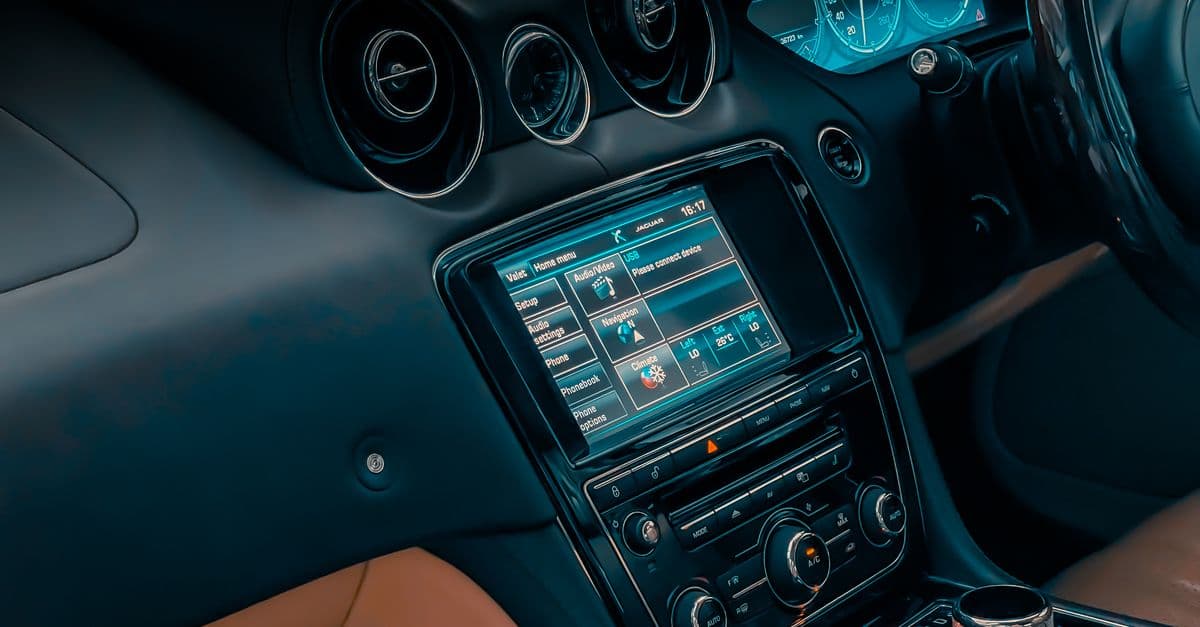
You can rapidly analyze infotainment feature requests by decomposing user needs into technical specifications, mapping competitive capabilities across platforms (Apple CarPlay, Android Auto, native OEM systems), and evaluating feasibility against hardware constraints, connectivity requirements, and automotive safety standards. Claude generates structured PRD frameworks with clear trade-offs between user experience, technical integration complexity, regulatory compliance, and business investment.
by alex1980alex
You can architect end-to-end telematics data systems that efficiently capture, transmit, and store vehicle signals across OBD-II, CAN bus, and cloud infrastructure. This skill guides you through signal selection, schema design, bandwidth optimization, and compliance validation—helping you balance competing demands like cellular cost minimization, safety-critical signal fidelity, regulatory compliance (GDPR, data residency), real-time alerting, and retrospective analytics. You'll produce production-ready architectures that scale cost-effectively across growing vehicle fleets.
by alex1980alex
You can map end-to-end telematics data flows from vehicle sensors to backend systems, identify redundant or low-value signals consuming bandwidth, design tiered collection strategies by vehicle platform, assess data quality impact on downstream analytics, and create technical specifications for OEM data contracts. This skill helps you optimize telematics infrastructure for scalability while managing real-time data constraints across heterogeneous fleets.
by alex1980alex
You can rapidly prototype MaaS network scenarios, forecast demand across multiple transportation modes, and optimize service coverage areas without building models from scratch. The skill guides you through structured analysis to balance operator economics (fleet sizing, vehicle utilization) with user accessibility (first-last mile coverage, wait times), typically compressing 2-3 weeks of transportation consultant work into 2-3 days.
by alex1980alex