


Vehicle Dynamics Simulation Setup & Validation
Configure and validate vehicle dynamics simulations with solver setup and pre-run verification

What You Can Do
You'll establish validated simulation architectures that execute cleanly and produce physically meaningful results. This skill guides you through model topology decisions, solver parameter selection, constraint formulation, and pre-run validation checkpoints. You'll identify and eliminate configuration errors—improper contact stiffness, inconsistent degrees of freedom, poorly scaled inertia properties—before wasting CPU hours on failed simulations.
Features
Choose appropriate integrators, tolerances, and step sizes based on vehicle dynamics physics and simulation objectives
Define proper contact stiffness, damping, and friction coefficients; formulate kinematic constraints for suspension linkages and bushings
Verify degrees of freedom, joint definitions, and mass distribution align with vehicle architecture (SUV, sedan, EV platforms)
Execute validation tests (static equilibrium, kinematic sweep, impulse response) to catch errors before full simulations
Adapt procedures across ADAMS/Car, Simpack, RecurDyn, MATLAB/Simulink, and other MBD environments
Define sensor placement, signal logging, and result file formats for post-simulation analysis and validation
Transition existing models to new vehicle architectures with systematic parameter mapping and re-validation
Structure models and solver settings to support robust optimization loops and sensitivity studies
Example Output
Example 1: Solver Configuration Report
- Integrator: HHT (generalized-α) with ρ∞ = 0.8
- Relative tolerance: 1e-4, Absolute tolerance: 1e-6
- Initial step size: 0.001 s, Max step: 0.01 s
- Contact penalty stiffness validated against tire stiffness (MN/m range)
- ✓ Simulation converges in 8 hours (vs. 48 hours with default settings)
Example 2: Pre-Run Validation Matrix
- ✓ Static equilibrium test: Vehicle settles within 2 mm (tire compression realistic)
- ✓ Kinematic sweep: Camber and toe variation match design intent ±0.1°
- ✓ Impulse response: Ride frequency 1.2 Hz, damping ratio 0.35 (matches prototype data)
- ✓ Contact stability: Tire patch pressure 0.15–0.25 MPa (physically reasonable)
- ⚠ Warning: Steering linkage backlash 0.5° detected—verify against CAD
Example 3: Model Scaling Checklist EV to ICE conversion: Mass redistribution (+150 kg battery), CG height +45 mm
- ✓ Recalculated suspension stiffness for new load case
- ✓ Validated roll center geometry with updated geometry
- ✓ Re-tuned damper curves for revised natural frequency
- ✓ Reran kinematic validation—all metrics within ±2% of target
What's Included
- SKILL.md: Structured methodology for simulation setup and validation
- Solver Configuration Template: Parameter selection matrix for different dynamics scenarios (cornering, braking, ride)
- Pre-Run Validation Checklist: Step-by-step verification tests with acceptance criteria
- Model Topology Audit Worksheet: DOF accounting, joint definition verification, mass property validation
- Platform Translation Guide: Procedure mapping across ADAMS/Car, Simpack, RecurDyn, and MATLAB/Simulink environments
- Contact & Constraint Definition Framework: Stiffness, damping, and friction selection methodology with tuning examples
Who It's For
- Vehicle Dynamics Engineers — Configure and validate multi-body simulations for handling, braking, and suspension analysis
- Automotive NVH (Noise, Vibration, Harshness) Engineers — Set up ride and vibration simulations with proper solver settings for frequency response accuracy
- Simulation Model Owners — Troubleshoot non-converging models and transition architectures across new vehicle platforms
- Control Systems Engineers — Prepare vehicle dynamics models for closed-loop controller-in-the-loop (CIL) testing
- Test & Validation Engineers — Structure simulations to align with instrumented vehicle test data for model correlation
Best For
- Building new vehicle dynamics models from subsystem components
- Scaling existing simulations to new vehicle architectures (sedan to SUV, ICE to EV)
- Troubleshooting non-converging simulations or physically implausible outputs
- Preparing models for parameter sweep studies and optimization loops
- Validating simulation behavior against instrumented vehicle test data
- Transitioning models between MBD simulation platforms
You might also like
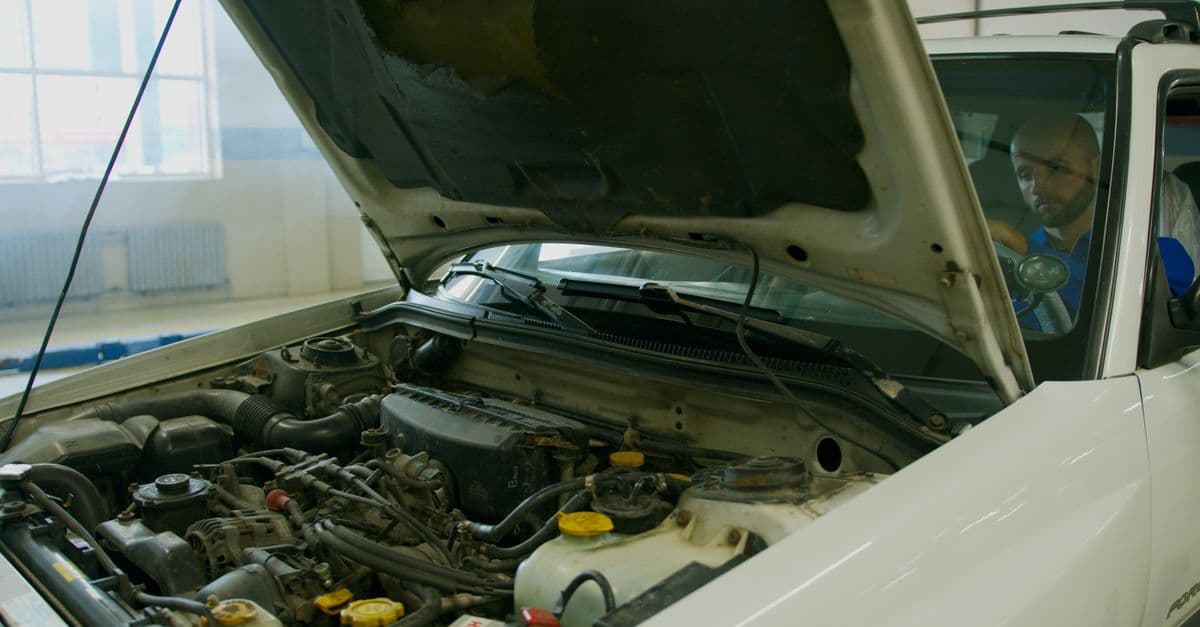
You can pinpoint the exact source of sensor fusion failures—whether they stem from misaligned camera/LiDAR/radar extrinsic calibration, timestamp desynchronization, data validation gaps, or algorithmic issues. This skill decomposes multi-modal perception errors into sensor-specific contributions and generates quantifiable diagnostic reports that directly guide calibration and testing teams toward fixes rather than blind troubleshooting.
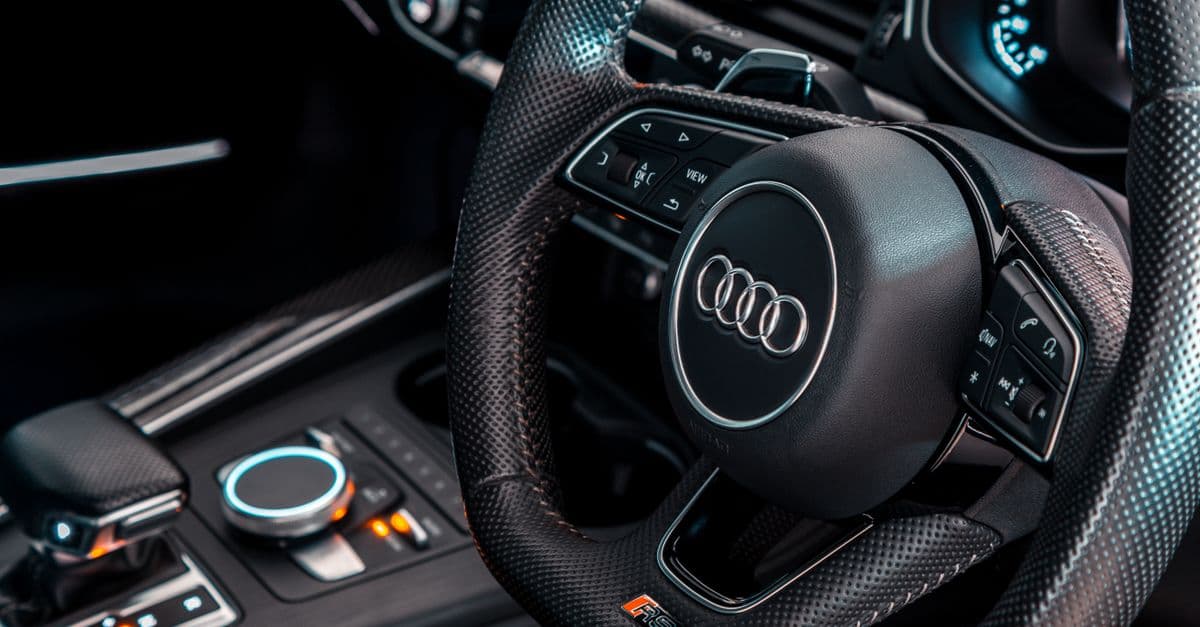
You can analyze multi-dimensional steering system performance including torque characteristics, self-alignment torque, steering angle feedback, road feel transmission, and torque vectoring effects. Extract actionable insights from simulation and test data to identify root causes of steering feel issues, then develop tuning recommendations for steering gear ratios, EPS algorithms, suspension geometry effects, and torque vectoring control strategies.

You can design complete AUTOSAR 4.x system architectures by automating component allocation across abstraction layers, modeling port interactions and service interfaces, and validating compliance with AUTOSAR standards. Claude helps you create standardized architecture documentation, detect circular dependencies and interface mismatches, and generate port interaction matrices—accelerating ECU architecture development while ensuring standards adherence.
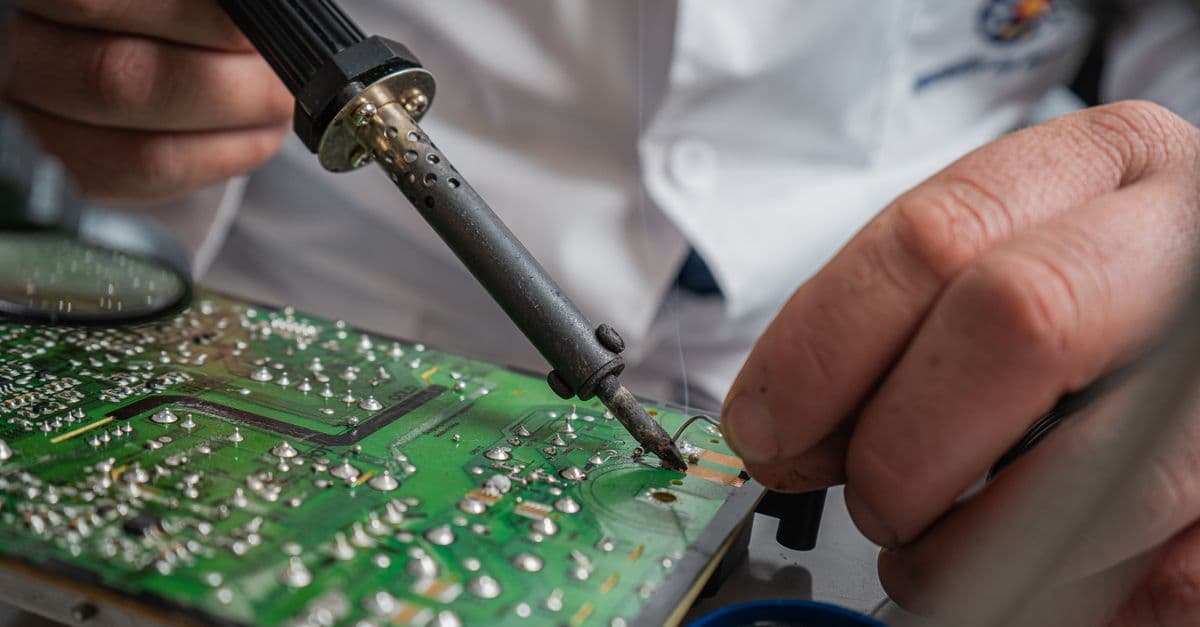
You can model transient and steady-state thermal behavior in EV power electronics, calculate junction temperature rise during driving cycles, and design cooling strategies that meet automotive thermal specifications. This skill helps you size heat sinks, evaluate thermal interface materials, compare active versus passive cooling approaches, and validate designs against AEC-Q200 and ISO 16750-3 standards.

You can validate AUTOSAR software architectures across multiple compliance dimensions—layer separation, component interfaces, port definitions, service interfaces, and communication semantics. The skill identifies structural violations, missing documentation artifacts, and compliance gaps early in the design phase, helping you catch issues before formal gates and functional safety audits. It generates architecture compliance reports and documentation needed for ISO 26262 functional safety reviews.

You can evaluate simulation scenarios against functional safety and SOTIF requirements, identify untested edge cases and high-risk operational design domains, map failure modes to root causes, and generate traceability matrices linking requirements to validation results. This skill transforms raw simulation data into defensible technical documentation that demonstrates test completeness and readiness for real-world deployment.

You can decode SAE J2012 standard CAN diagnostic trouble codes (P, B, C, and U codes) with manufacturer-specific extensions, analyze multi-frame fault sequences and temporal patterns across multiple modules, and generate structured diagnostic hypotheses that differentiate between electrical, communication, and algorithmic failures. This skill transforms raw DTC data into actionable investigation vectors, reducing diagnostic analysis cycles from hours to minutes while improving root cause accuracy.

You can quantify sensor fusion performance across object detection, classification, tracking, and localization using standardized metrics. The framework helps you identify systematic failure modes in diverse environmental conditions, document safety-critical gaps, and generate structured evidence packages for ISO 26262 and SOTIF compliance. This enables you to benchmark sensor configurations, define perception KPIs, and support regulatory submissions with rigorous performance documentation.